Culture Territories
series of events and installations | 2016-2017
Warsaw-Baligród
In 2016 with a group of friends we created a collective called Culture Terytories. The same year we applied with our idea of “experimental preservation practises” to the Future Architecture Platform, a programm that promotes unusual architectural ideas and invites its members to meetings and lectures where they can share their approach and exhange knowladge with likely minded proffesionals.
Bellow I attach the “statement” we included while appling to the programme.
Even though our group does not work together any more, since we all live in different cities now, the scope of ideas we formed at that time still is present in our individual work. The interdisciplinrity of the group henced the idea of “experimental revitalisation” and proved in a sense that architecture is not a domain of architect only, and its preservation requires a complex approach that focuses performance of the building, and not only its revitalisation on a material level. It also grasps upon the idea of activisation of the local society, throught art practice.
Collective members : Hania Rani (pianist), Łukasz Pałczyński (architect), Adrian Krężlik (architect), Natalia Kobylińska (filmmaker), Jakub Andrzejewski (architect). Linked you will find their instagram feeds where you can get to know more about them and their ongoing projects.
Culture Territories statement (2016) :
1. Describe your idea of future architecture :
Culture Territories is an collective formed by young, creative people from Warsaw. Our aim is to show the potential of the places seemingly unattractive by making a small scale instalations supported by meetings with artists and workshops, that we think will effect local societies and emphasis a bigger change in minds of audience.
We think that valuable change can be made only by taking small steps. Interventions like this can work as acupuncture in space – they encourage bigger movements to come. They lead to development of aesthetic sense through active inclusion of citizens by workshops to show them their creative potential and to take independent action on their own.
Our goal is to open an adaptat places like the tserkov of The Dormition of the Virgin Mary in Baligród for a cultural events which main theme will be synergy in many areas of contemporary art. By presentation of contemporary art and use of new technologies (eg. 3D printed elements) and cooperation with outstanding artists from the areas of architecture, visual arts and music and education through direct contact with them.
The possibility of confrontation – city and country, new and old, technological progress and tradition can give unexpected effects. This event is not only an opportunity to take a creative dialogue between young artists dealing with different areas of art (architecture, music) but also a natural way to absorb the local population interest (by invitation to the concert, help with installation and other unusual activities in the village).
We observe that now most important issue is not to develop ideas for new buildings but to search for a way to preserve those we already have. By adding new matter to historical structure, we emphasise its unique beauty. Revitalisation can’t be only a physical (architectural) change in area – what is important the most is that it has to be multidimensional. Has to deal with society problems such as growing inequality between access to cultural events in small towns and big cities. Thats why taking action there is so important. We hope that eventually interventions we make will help to create of a modern cultural centers outside large cities.
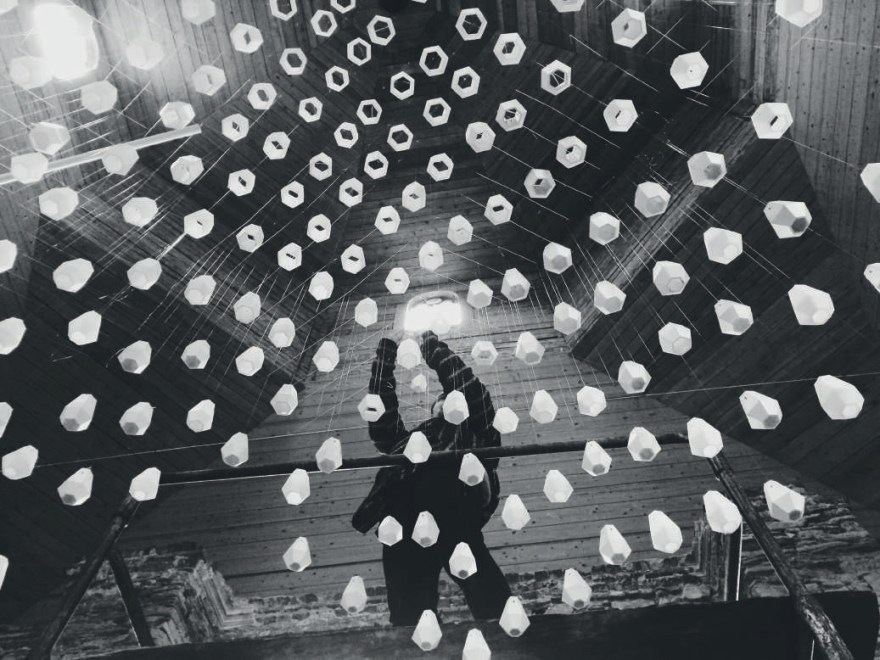
The first initiative was created by Łukasz Pałczyński in 2015. He built a spatial installation in the middle of the historic but abandoned tserkov of Dormition of the Virgin Mary in Baligród, a small, numbering less than 1,500 inhabitants village in Podkarpackie, Poland. Instalation was presented with other architectural student projects for Baligród area in form of an exhibition in churches interior.
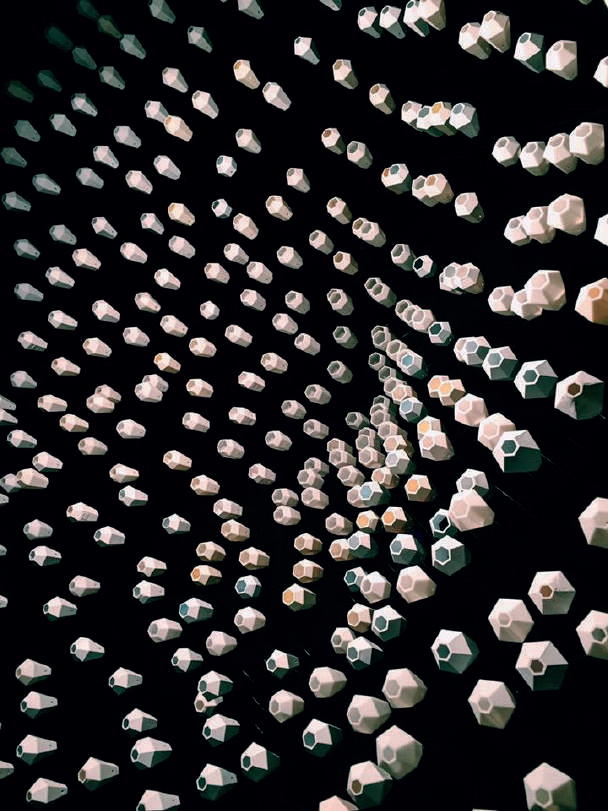
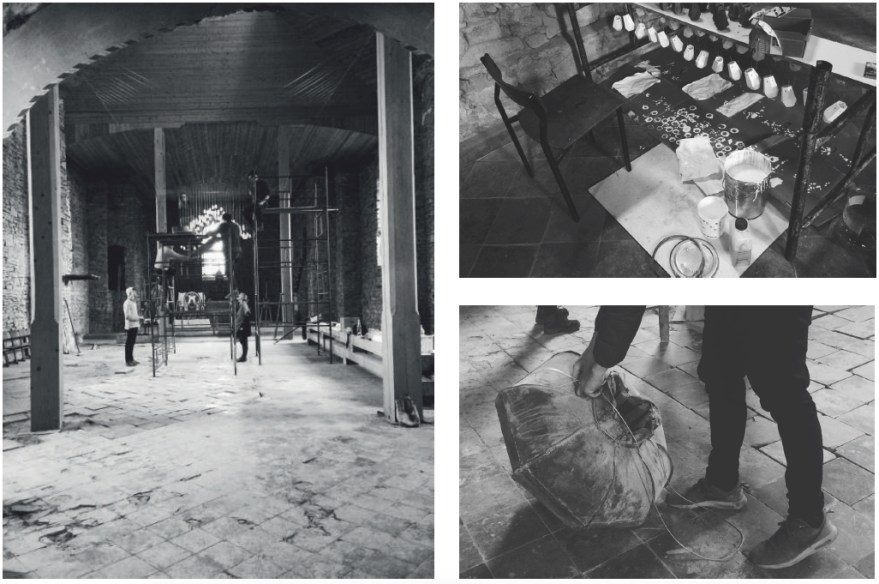
Installation design and its implementation, however, given enough satisfactory aesthetic effect, that the decision to proceed with such an idea became somewhat obvious. The following year, Łukasz decided to invite to work on the project Adrian Krężlik, architect and urban planner of young generation, specializing in the field of parametric architecture and the use of new technologies. As a result of this cooperation instalation was created from more 500 small elements hanged in form of a dome. We used still little popularized technology of 3D printing, which enabled a quick time execution of all elements that were printed by more than 30 people who own printers. This way project is the result of attempts to popularize the idea of crowdfunding – the co-creation and co-financing of such projects by a group of interested people.
Afterwards group was also joined by two other young architects, Agnieszka and Jakub who supported the initiative in building the whole structure, and Natalia Kobylińska, responsible for the visual documentation of the entire process and the opening of the exhibition. During the opening ceremony, which took place on May 2, visitors could see the illuminated installation and listen to a concert, which for some residents, as it turned out, was the first such experience in life.
 adkworks.photo.blog