Sanatorium of memory : memorial for Jewish community in Otwock
master thesis | June 2020
Royal Danish Academy of Fine Arts in Copenhagen
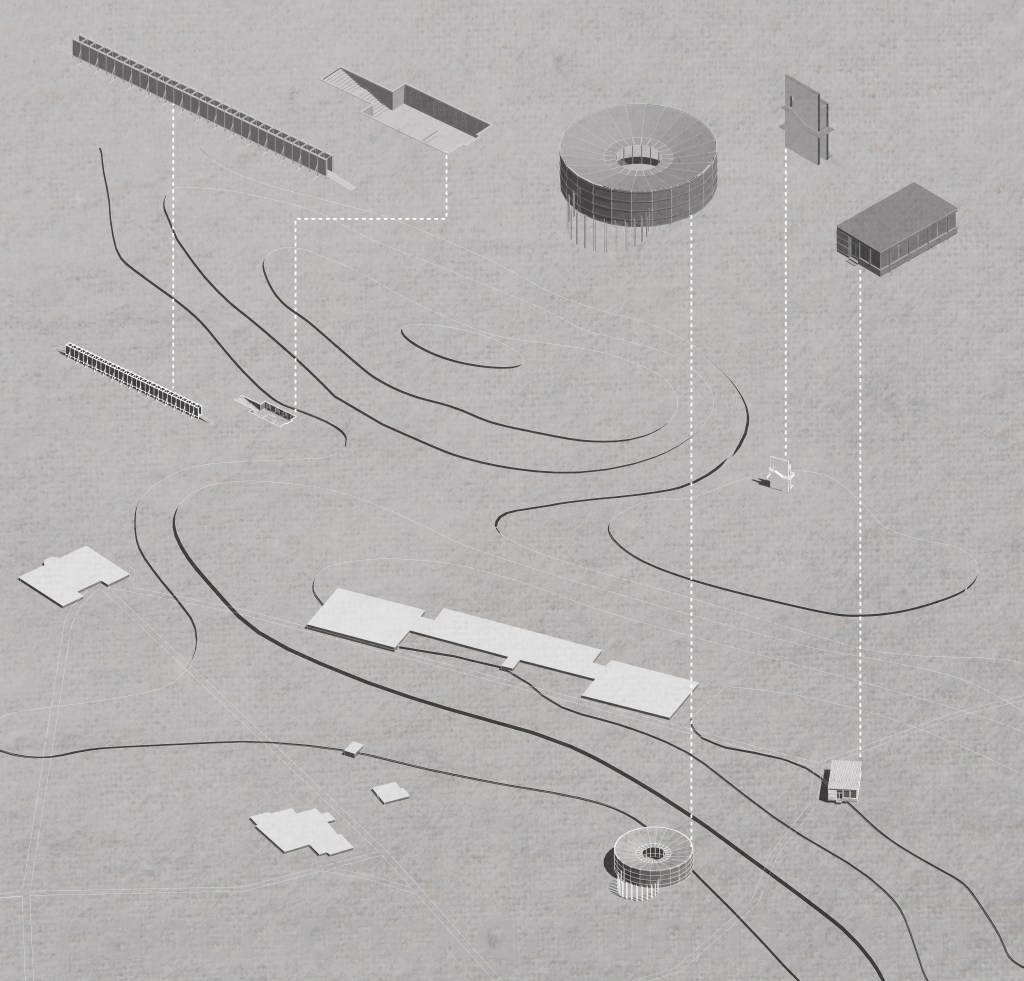
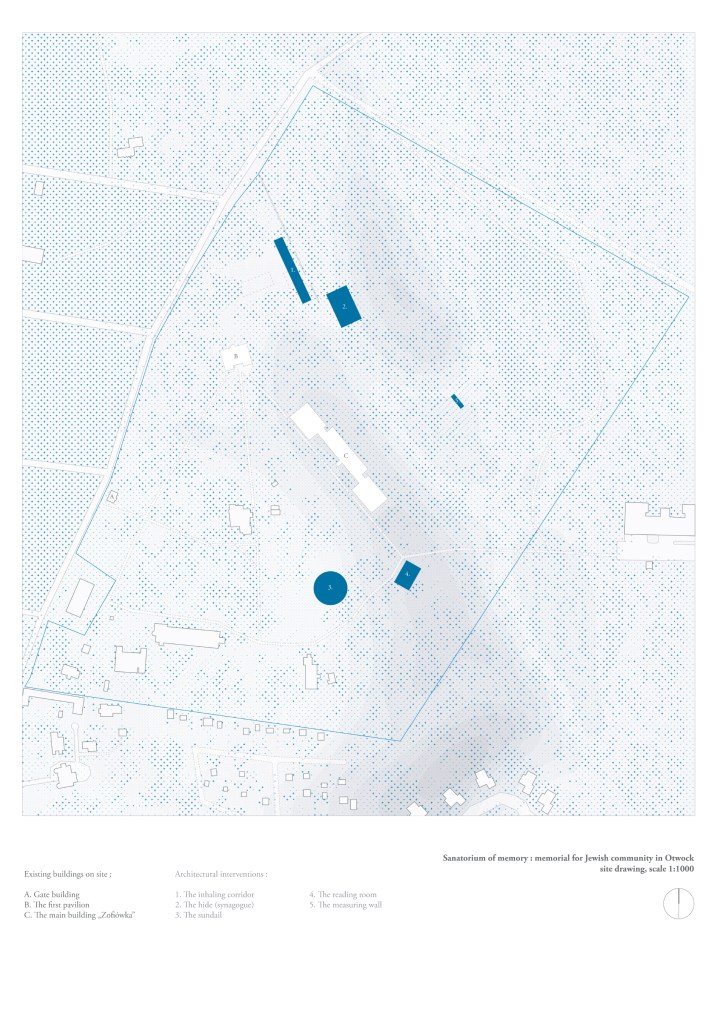
The project called Sanatorium of memory – memorial for Jewish Community in Otwock explores the link between architecture and memory. It is a set of architectural interventions, surrounding the ruins of the previous sanatorium for mentaly ill Jews. The project aims to rehabilitate the absent memory of the exterminated community. It seeks inspiration in vernacular architecture of the city as well as broad architectural tradition of Polish heritage. The project focuses on exploration of varied ways of preservation, of both architectural tissue as well as memory of the past : collective and personal.
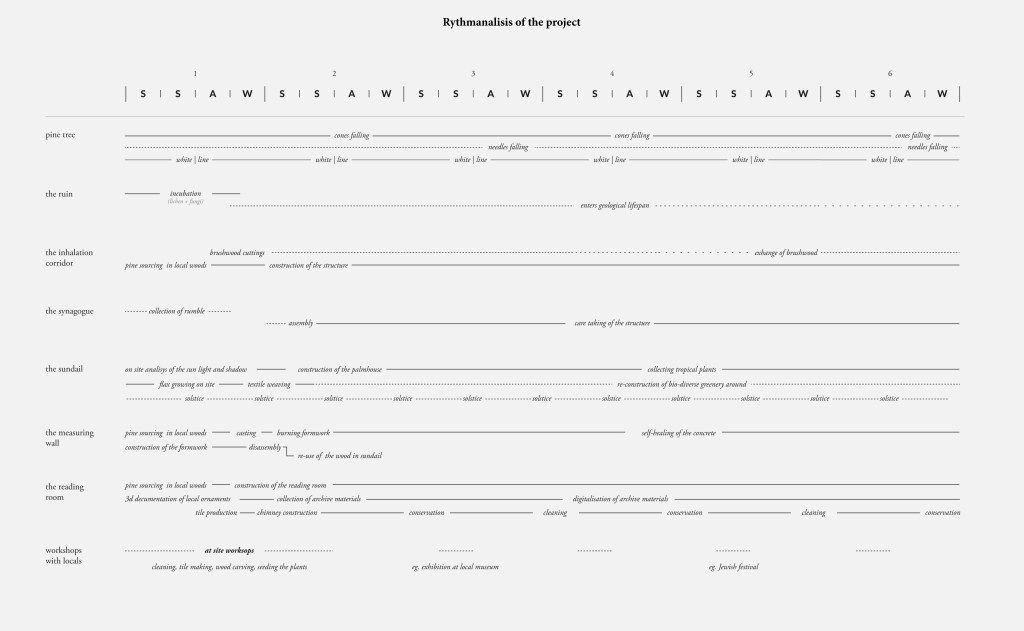
I based it on rituals and materiality connected with processes of healing, as a medium that due to the strict connection with body and atmospheres, might enable users to create new memories of the place. All installations follow the same criteria: they are made out of local materials, aim to create a multi sensual atmosphere, provoke movement or reflection upon known spaces. Taking into advantage that the architectural project is not a static object, but a choreography of changes in time, I focused on the processes bound with creation of the structures as well as their preservation and their performance in the future.
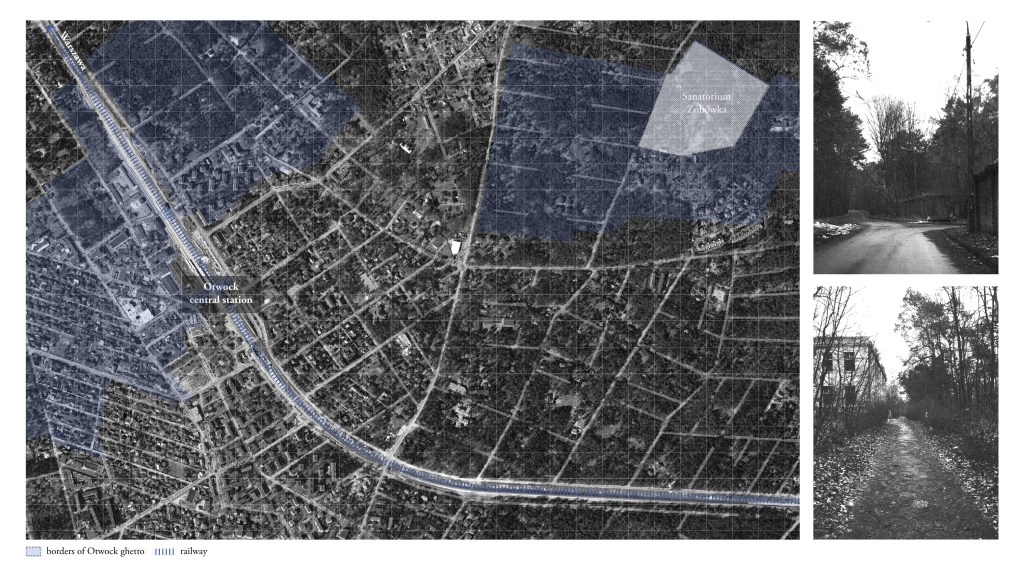
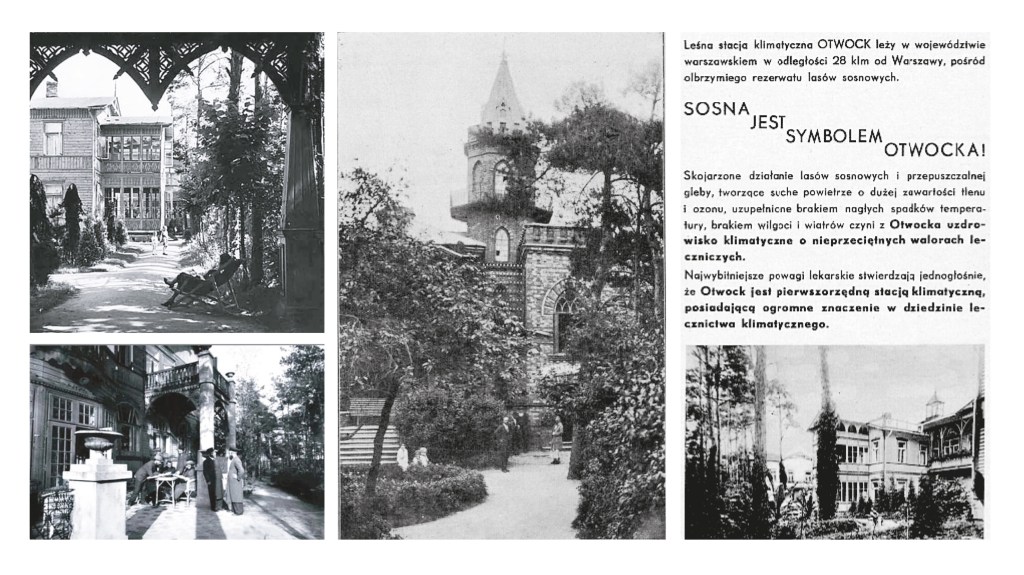
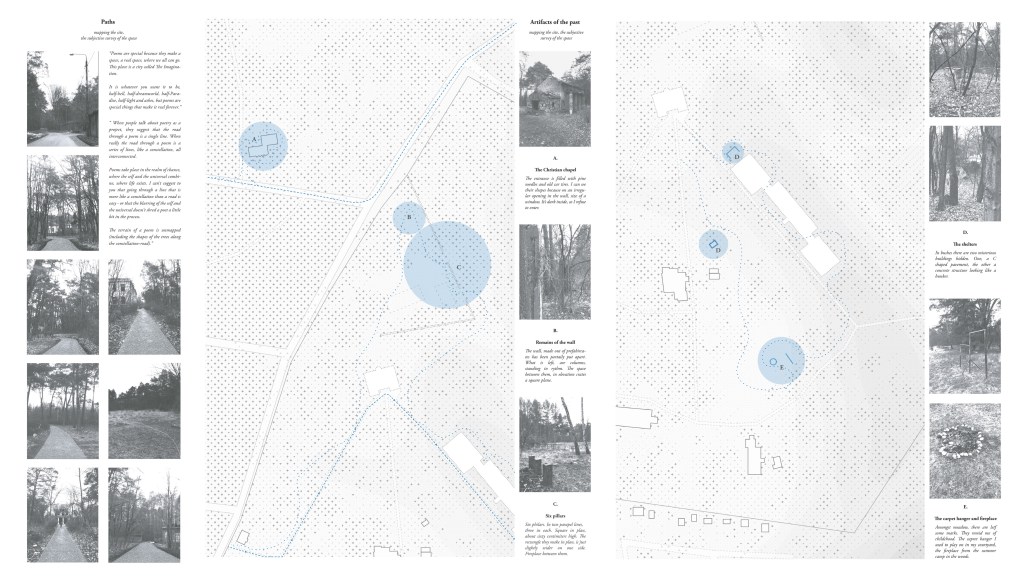
Otwock is a suburb satellite-city located 23 km from Warsaw. In the beginning of 20th century, Otwock became a popular health resort, due to its favourable climatic conditions, predominance of pine trees, sandy soil and dry air. This sparked the development of a specific type of woden vernacular architecture called “Świdermajer”, that in the top period of cities prosperity, numbered more than 500 wooden villas.
It is important to mention here that most of the permanent residents of Otwock, before the war, who were running the sanatoriums and guest houses were Jews who made up for 60% of the cities population One of the 3 big sanatoriums located on the peripheries of the city, among dense forest, was Zofiówka, a sanatorium for mentally ill Jews- now in ruin.
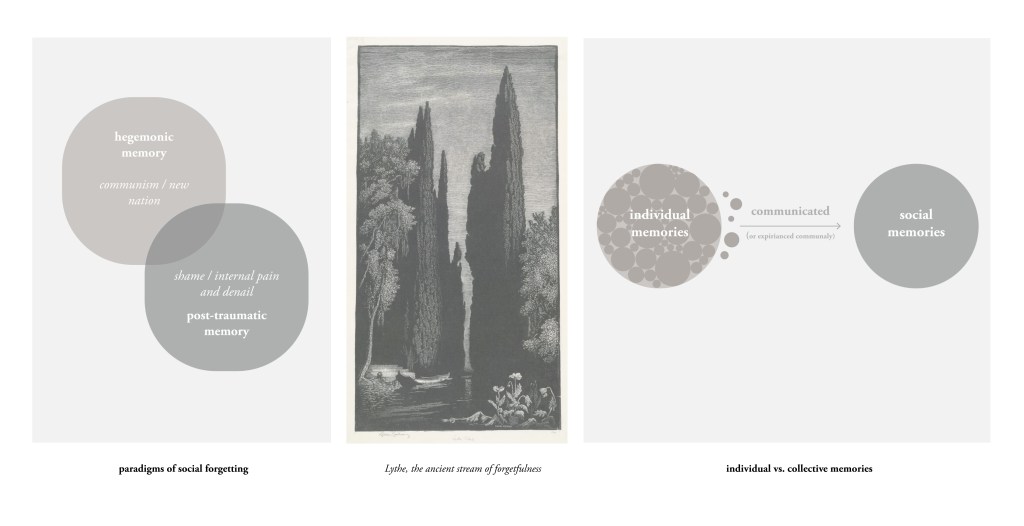
As a theoretical background to understand the phenomena behind absent memory of Jewish community in Otwock, I have suported the project on reaserch in memory studies. Until lately, there were two main ways of understanding why certain memories are absent. The paradigms of social forgetting – paradigm of hegemonic memory, where forgetfulness is imposed by the institutions in power and the paradigm of post-traumatic memory – where absence of memory is a reaction to degrading act or an extremely painful situation, where trauma is considered as an overwhelming experience that resists integration and expression.
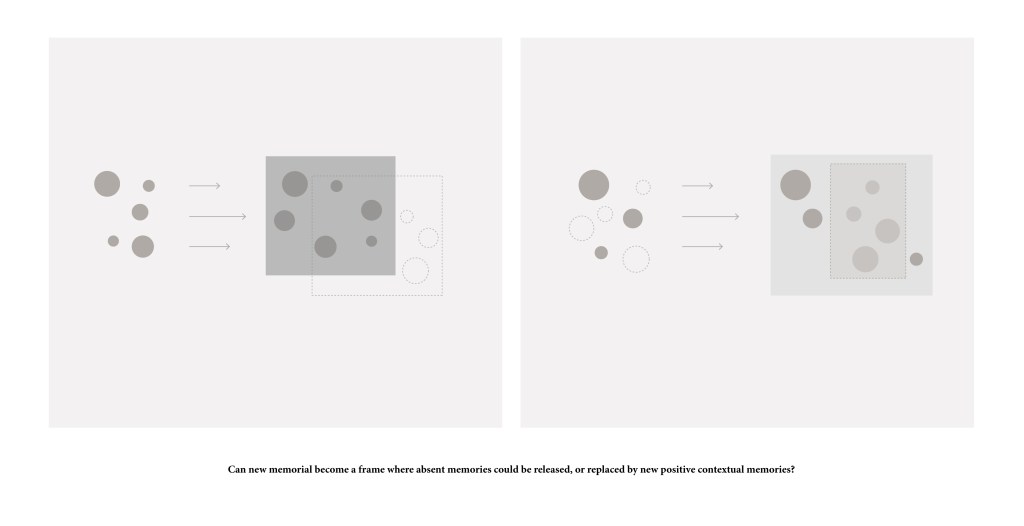
Some memories are absent even though they have been experienced by several different individuals or groups. The personal memories become social memories only if they fit into existing frames of perception and communication. So called frames. Frames are elements of coherent collection of narratives or mental filters for understanding and responding to surrounding reality. In order to rebuild absent memory a new frame has to be created. Can the new memorial become a frame where absent memories could be released or replaced by new positive contextual memories?
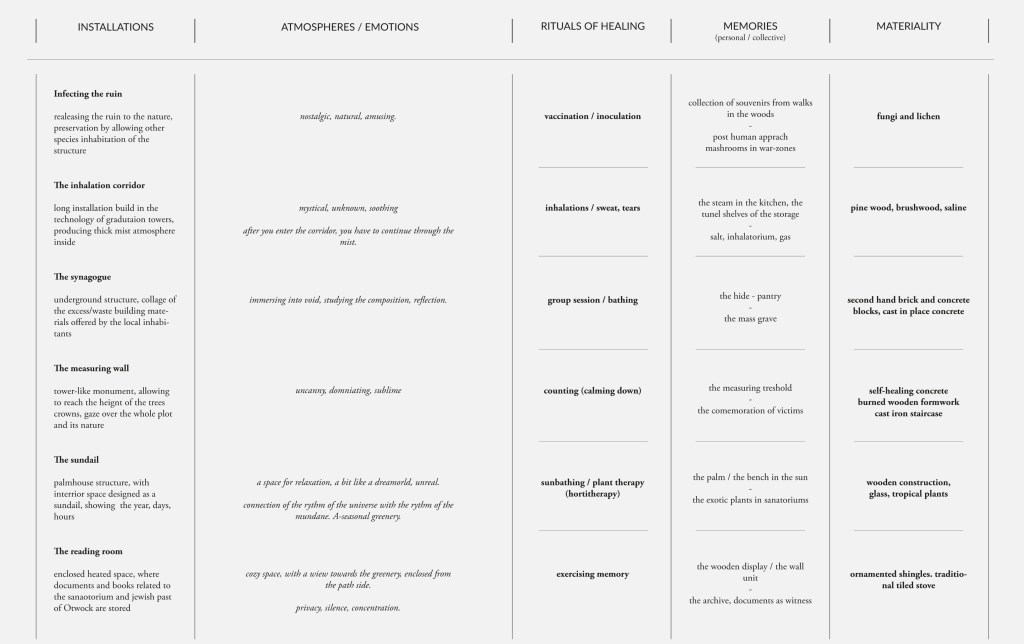
The design proposal consists of 6 interventions that are each related to both of the two main themes of the project : rituals of healing (as a link to the concept of senatorium and healing as a metaphor for preservation), and memory – the personal and collective intervening.
The relationship of each installation to the themes of healing, preservation, personal and collective memory is presented in this diagram. The inspirations influenced the atmosphere I was striving to create in each of them and the choice of materials.
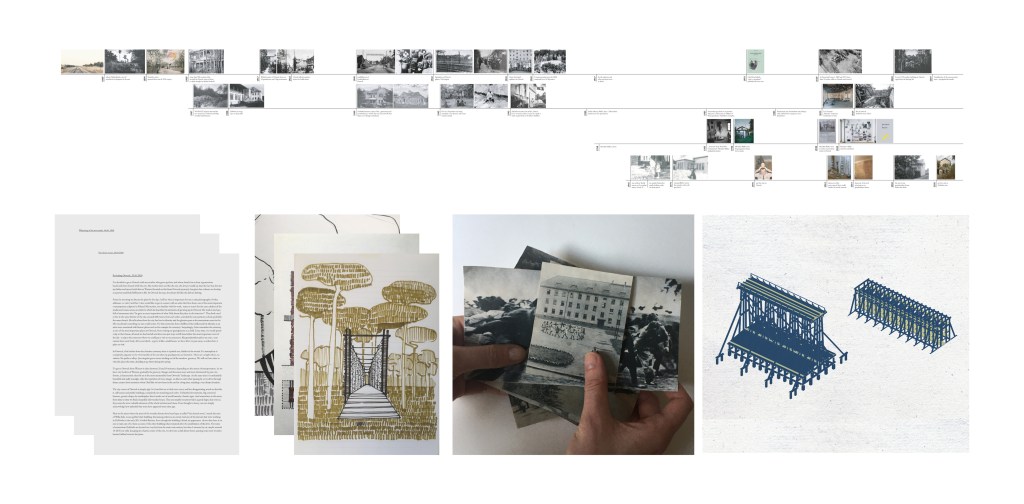
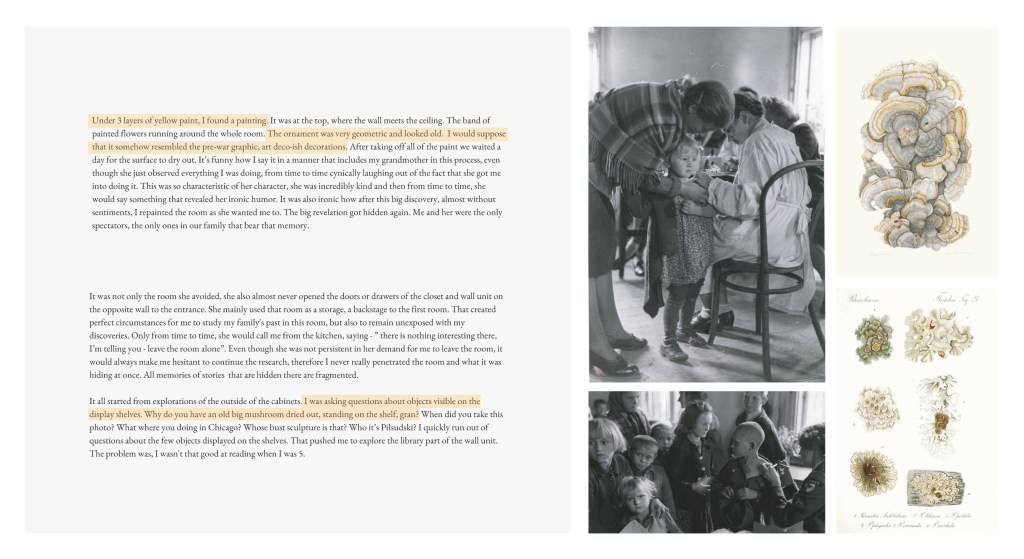
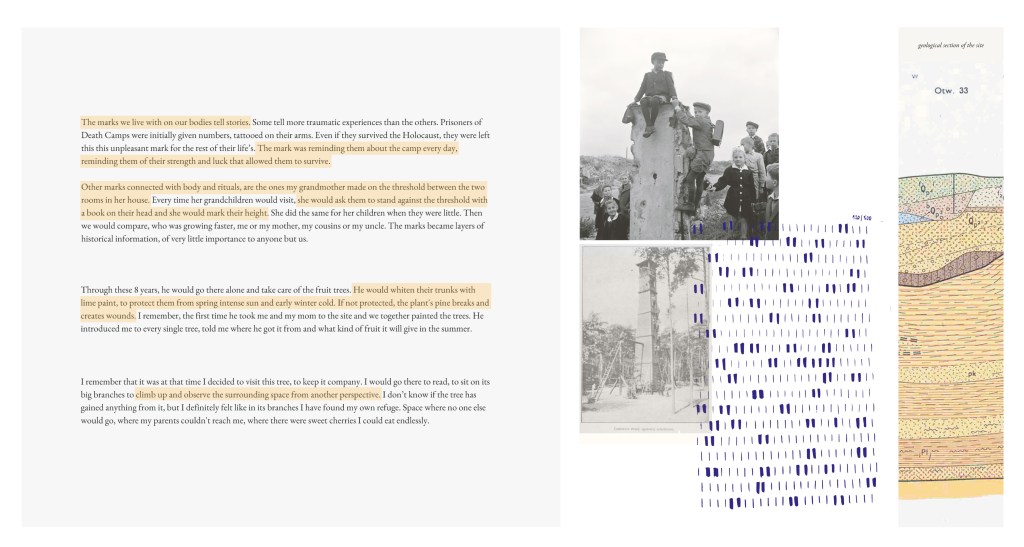
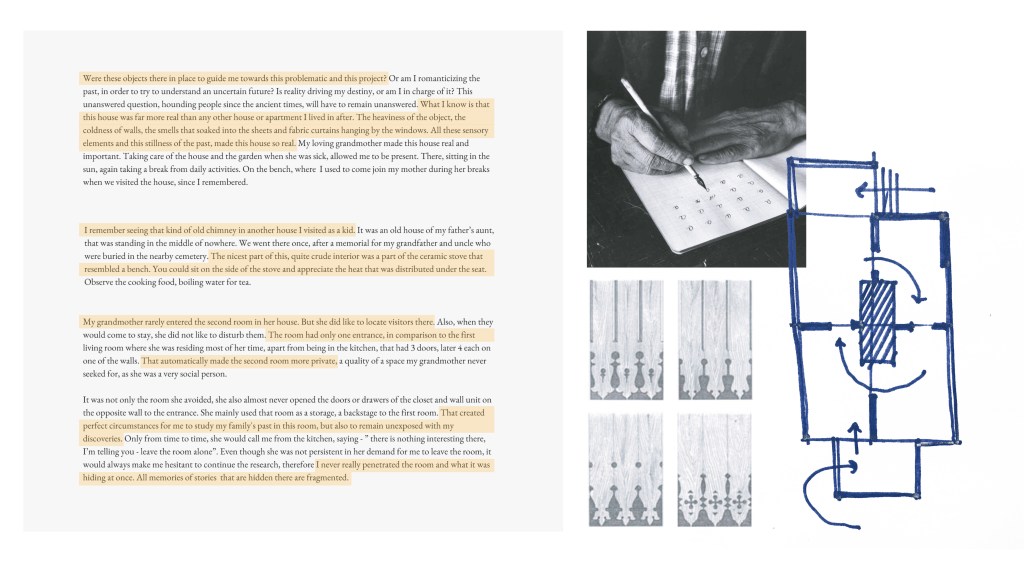
Method : I have analysed the history of the Jewish community in Otwock, relating it also to the past of the ruin on my site, and my personal timeline. I have written down my memories of my grandmother’s house to analyze and describe the atmospheres I wanted to recreate. I analyzed archive photographic materials, made many intuitive sketches as well as analysis of the local architectural tradition.
The method was meant to create a link between my personal memory of the place and the collective memory represented in the historical documents and historical architecture. To read the short memory notes conetcted with my memory of Otwock and especially my grandmothers house click here.
Infecting the ruin
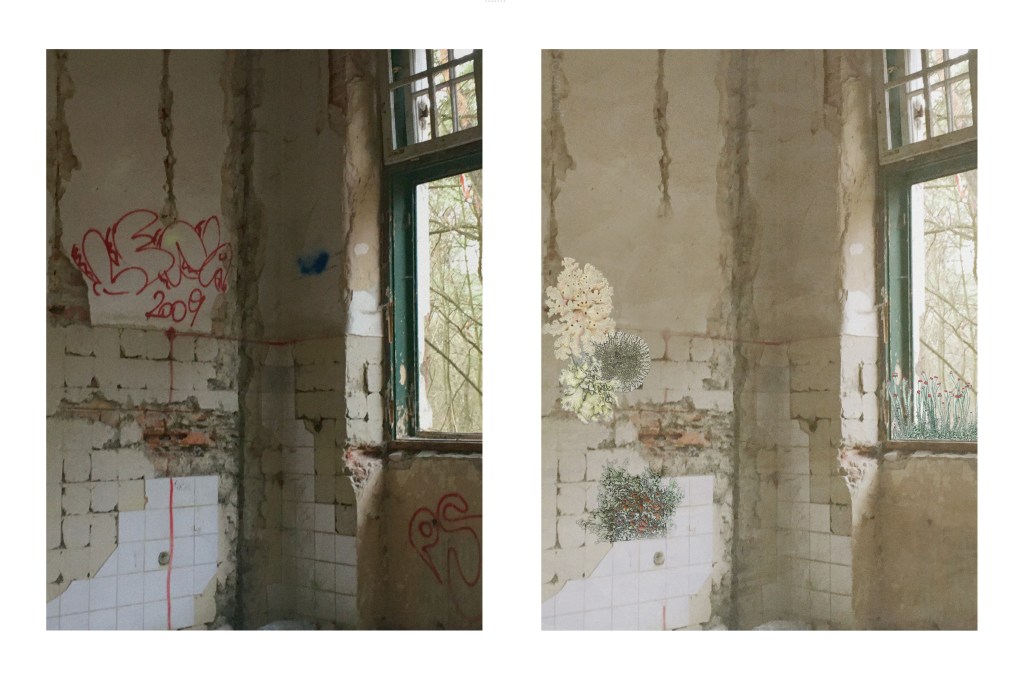
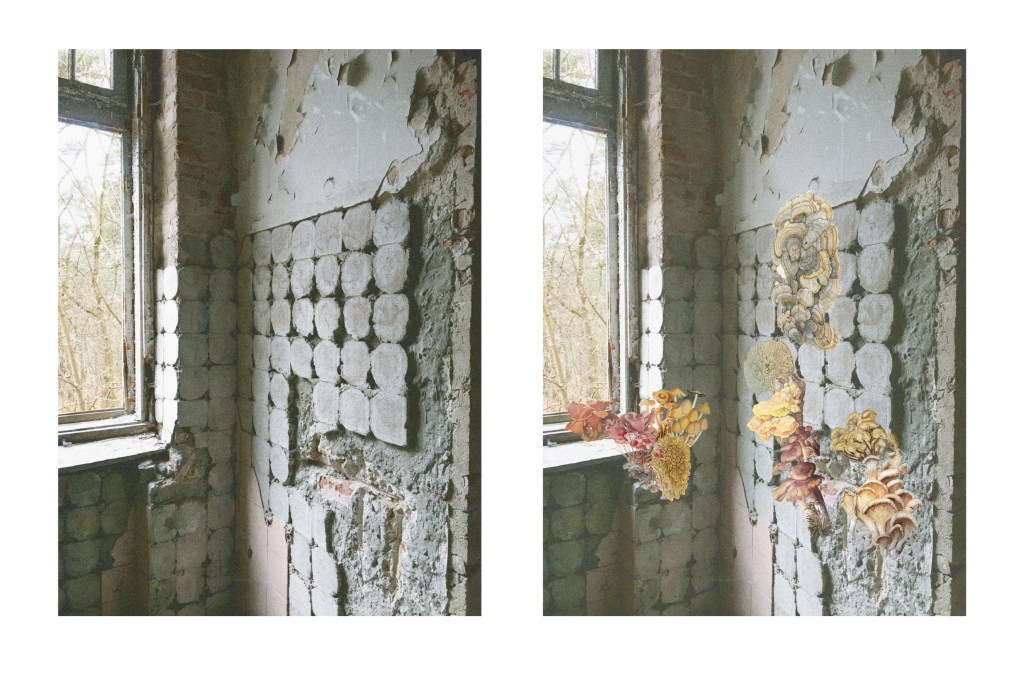
This intervention is connected with ritual oh healing – vaccination. I propose to preserve the ruin is to clean it and afterwards to moist it and inoculate lichen and fungi for them to take over the structure. The site has been vandalised by humans so I thought that a good way to put end to this is to release the structure that the nature, for other species/cultures to take over its inhibition. It can be seen as adoption of post-human approach to preservation, as it has been shown that ruins are a unique environment for new bio-diverse local species to develop in.
The inhalation corridor
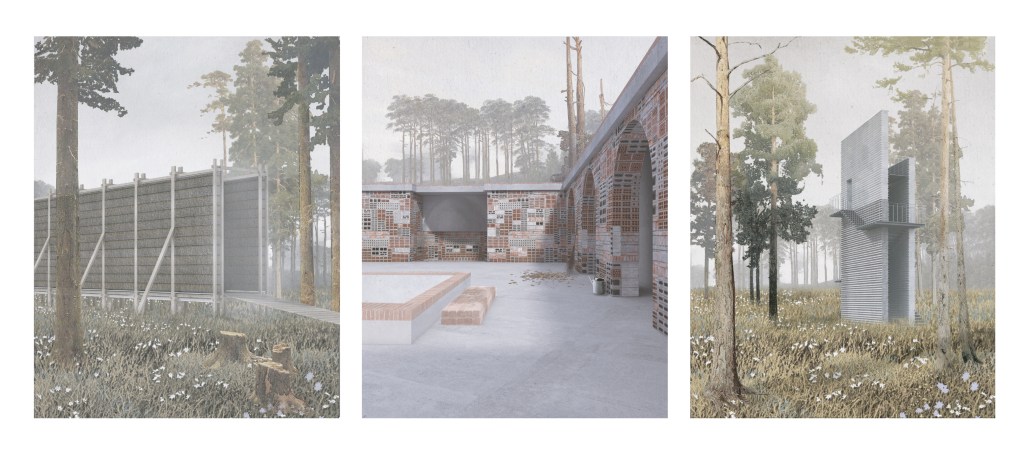
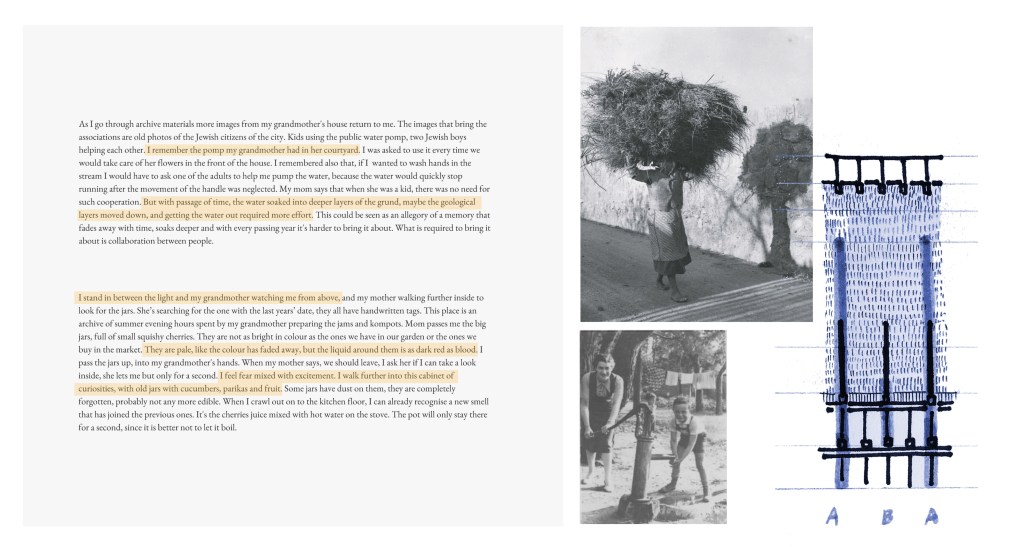
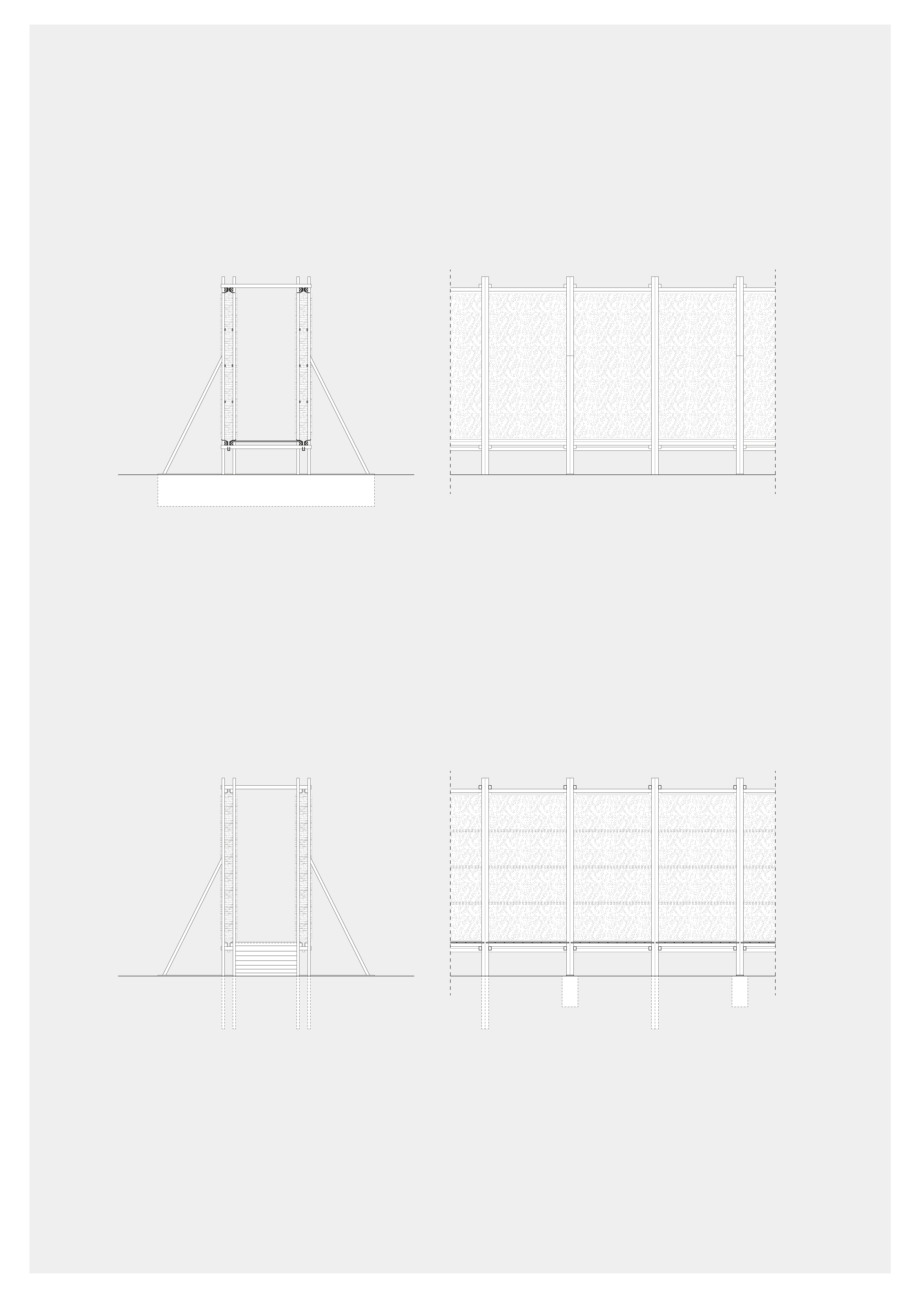

This installation is connected with ritual oh healing – inhalation. It is a long wooden structure built in the technology of a graduation tower ( it produces mist and specific atmosphere by evaporating water that runs through brushwood thet the walls are made from). The interesting part of this intervention is also the contrasting atmospheres it creates – the air in Otwock is very dry whilst inside of the structure it is moist. The structure engages senses such as smell, touch and view – as I can imagine that at some point in the walk you would get to the point you cannot see to the front or the back because of the dense mist.
The synagogue
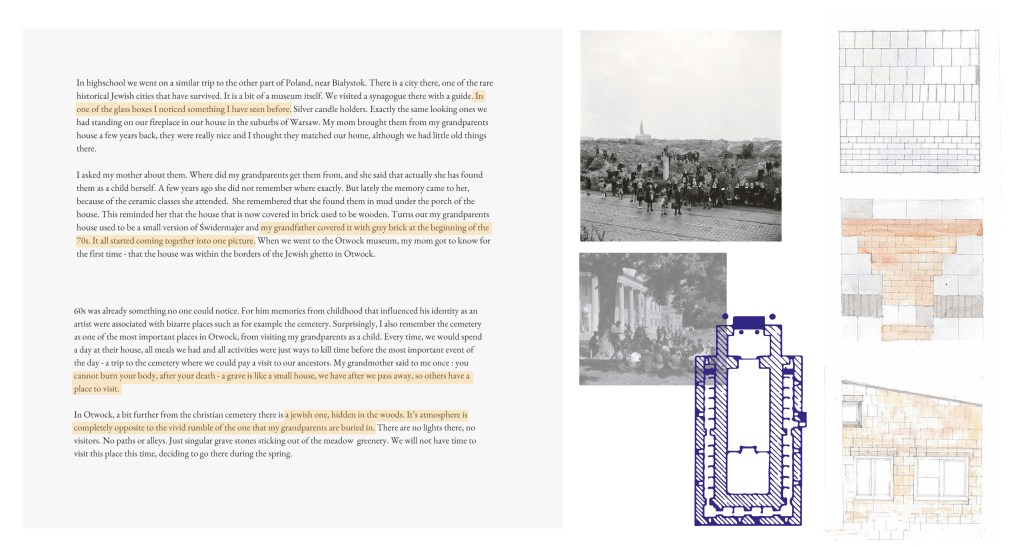
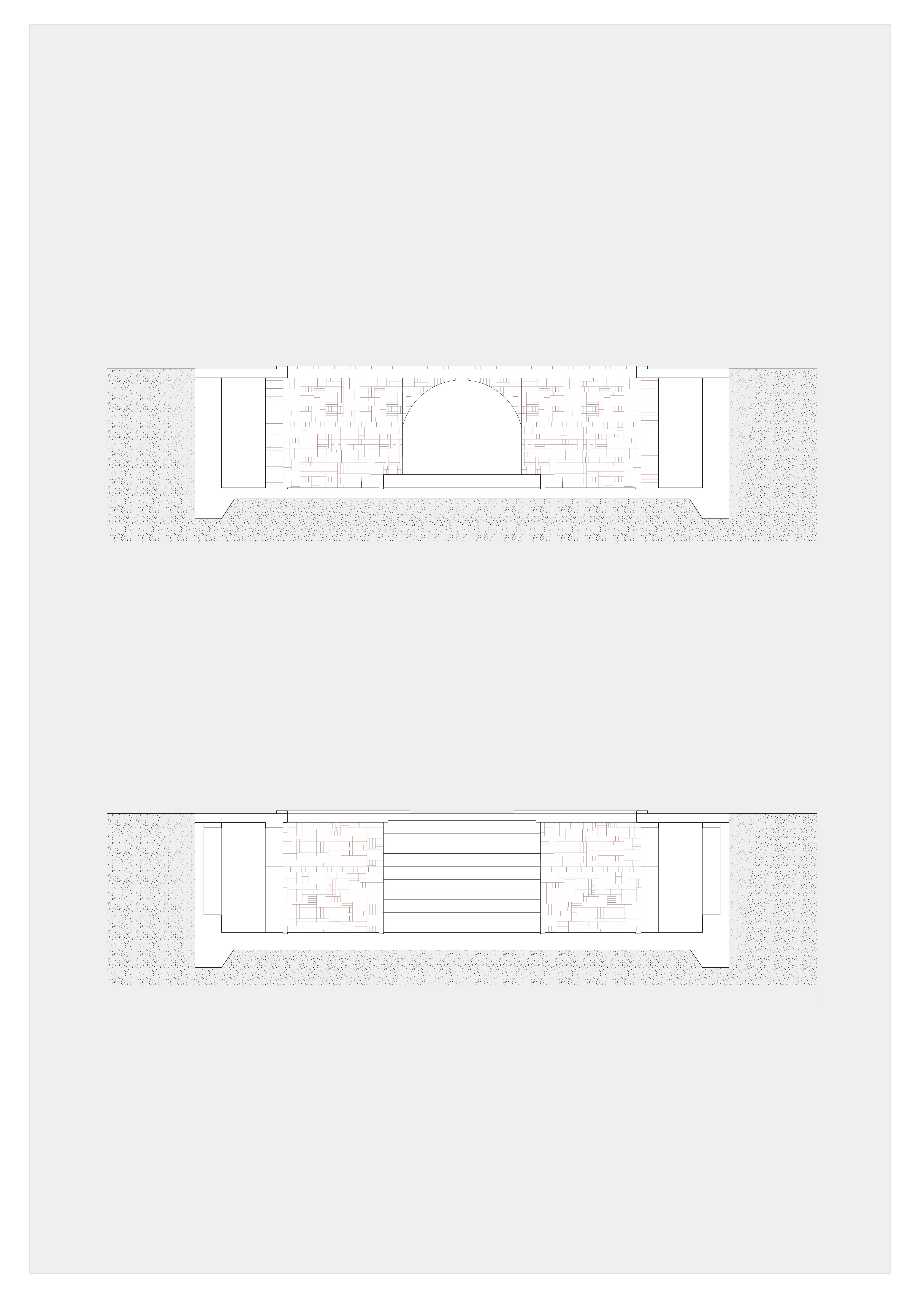

This installation is connected with the ritual of healing – bathing, or immersing the body into water/void. The installation in the geometry is inspired by the Synagogue that was destroyed by Nazi in Otwock at the begginging of the war. The space serves a function of a gartering space where the commemorating events that occur now (readings of the torah and Jeiwsh poetry) could take place.
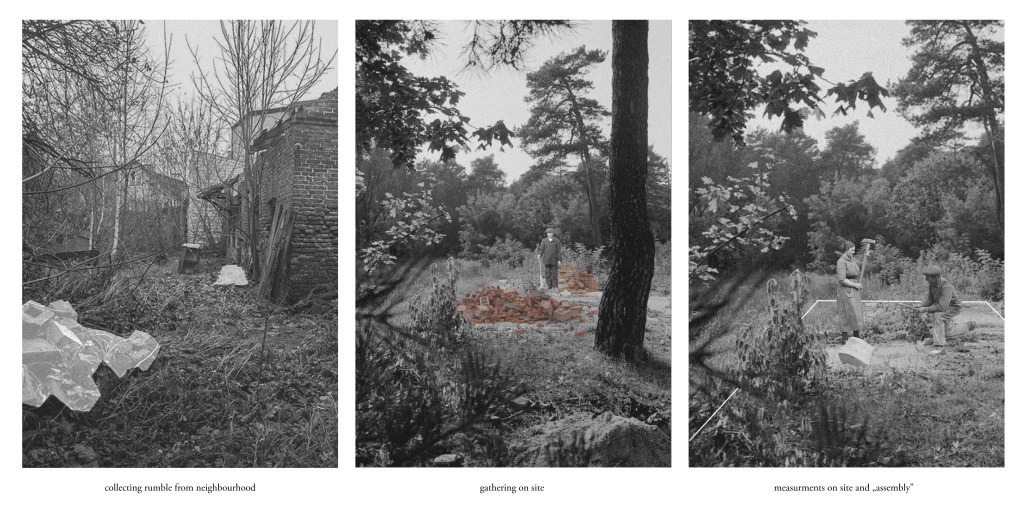
The two main elements of the synagogue – bima and aron become the most important elements narrating movement. There is also a passage behind an arcade where one can rest and contemplate the space. The walls are made out of excess rumble collected from the construction sites in the city.
The sundial
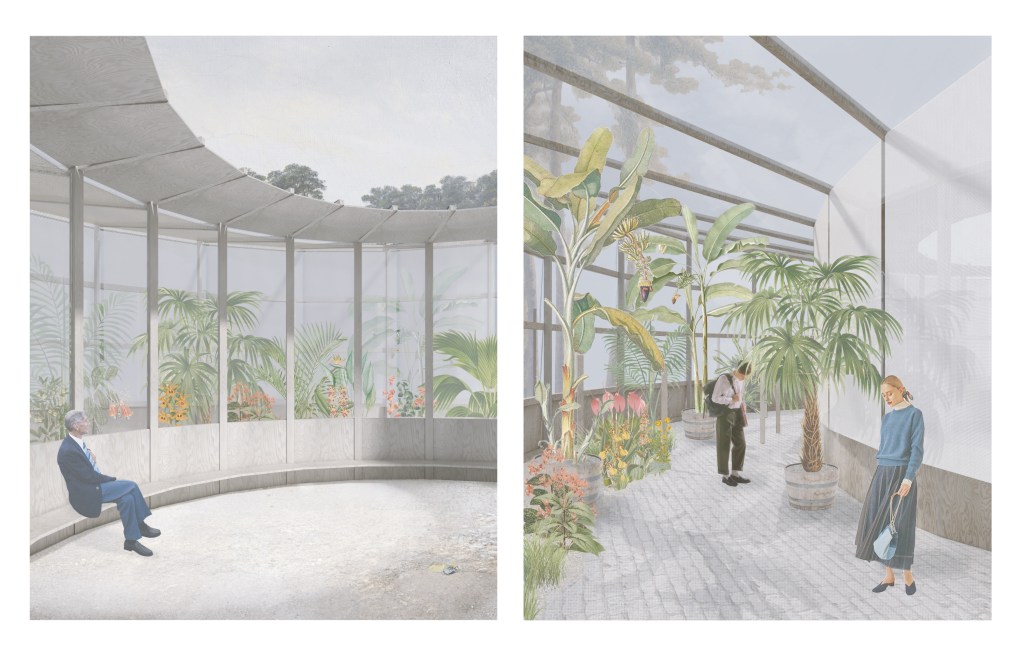
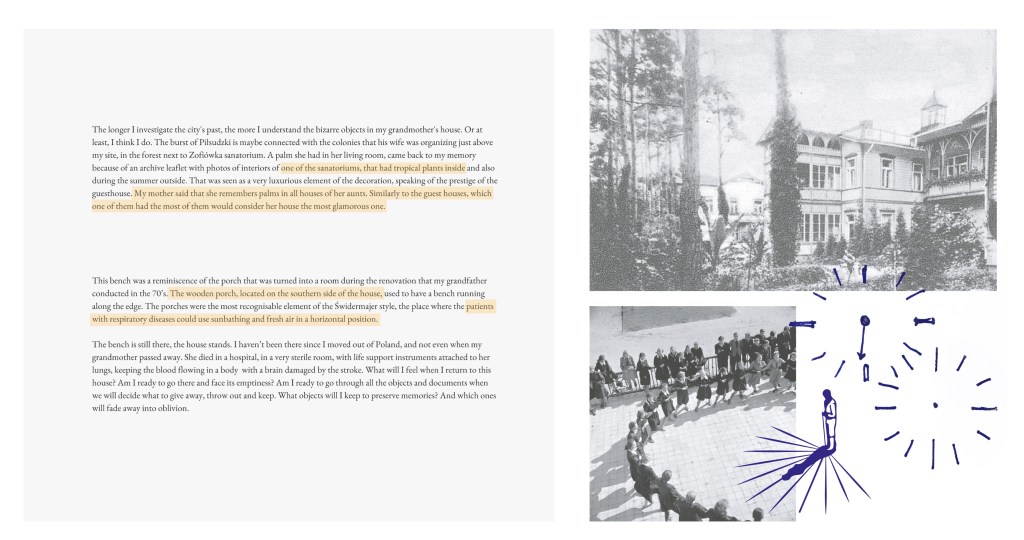
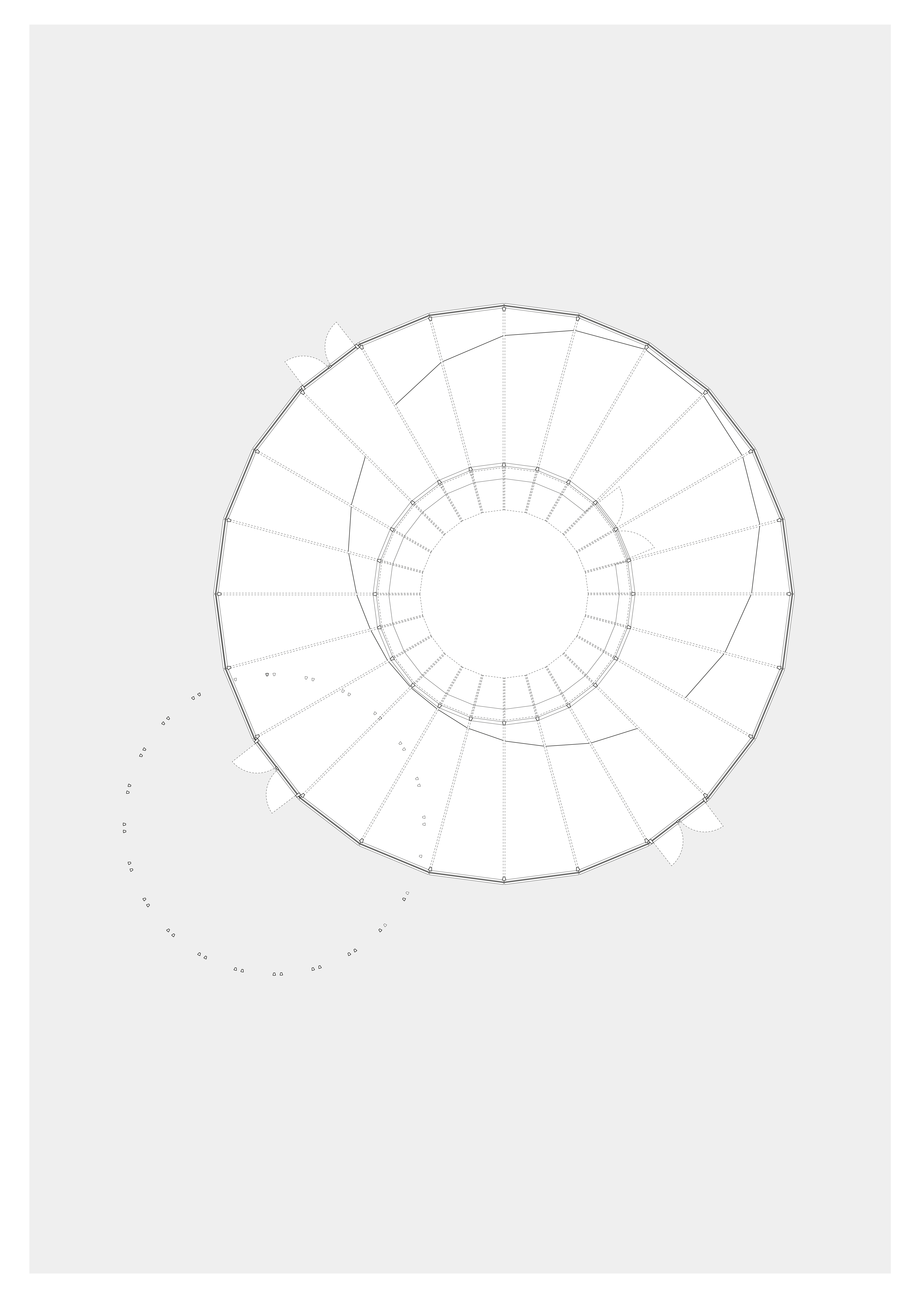

This installation is connected with the ritual of healing – sunbathing and plant therapy. In many sanatoriums in Otwock before the war there were tropical plants in the gardens and in rooms. The installation is a combination of these two elements – a palm house and a sundial installation – a sun clock that you can read time from using your body as a reference.
What was important to me was to create a few different atmospheres in the installations that would differ in the proportion of sun exposure. The structure is made out of wood and glass, with also hanging linen division panels. The plants are important elements that create the atmosphere inside. The interior patio is a place that is a reference to the porches and the bench in my grandmother’s house, a space for rest and silence.
The measuring wall
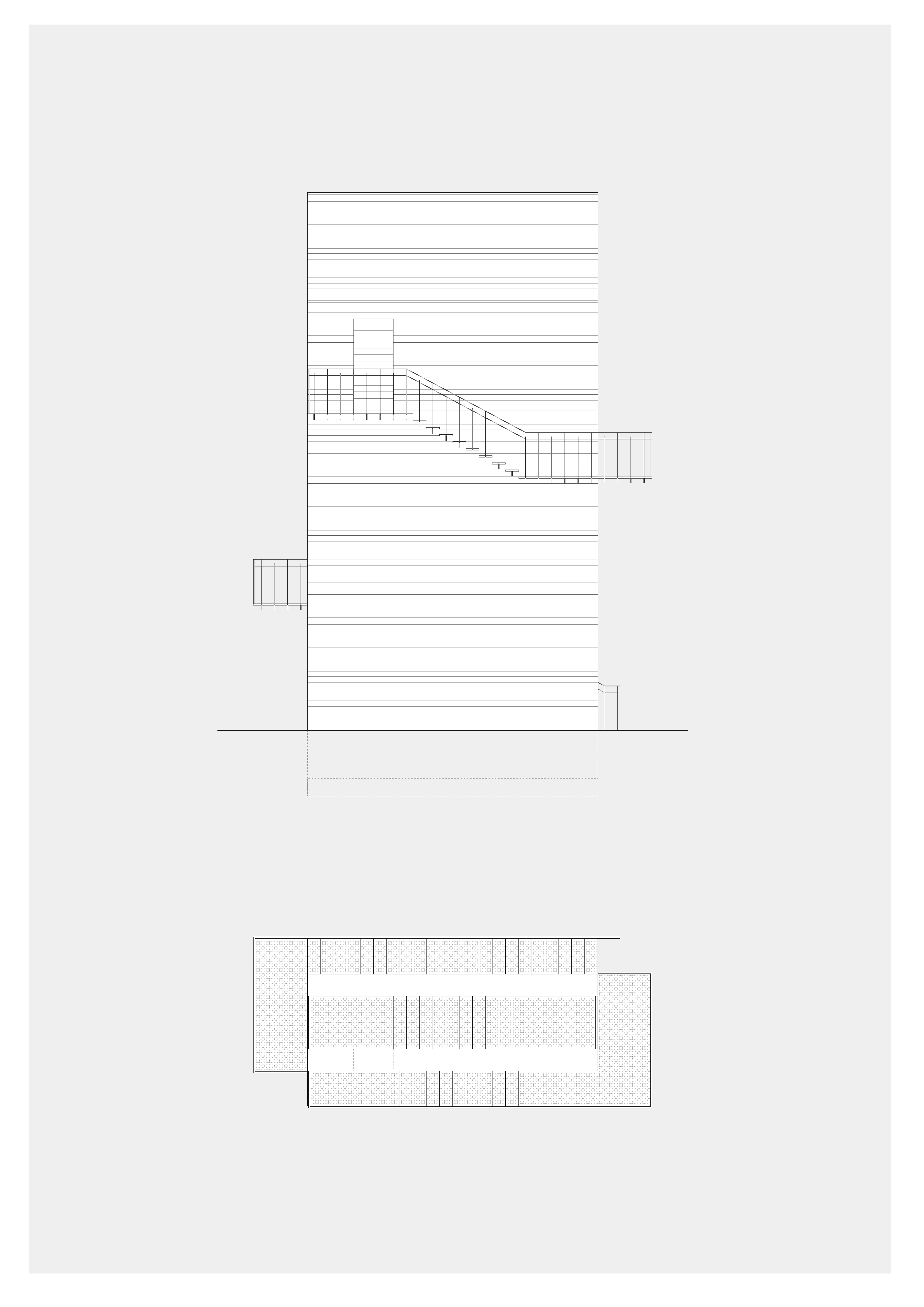

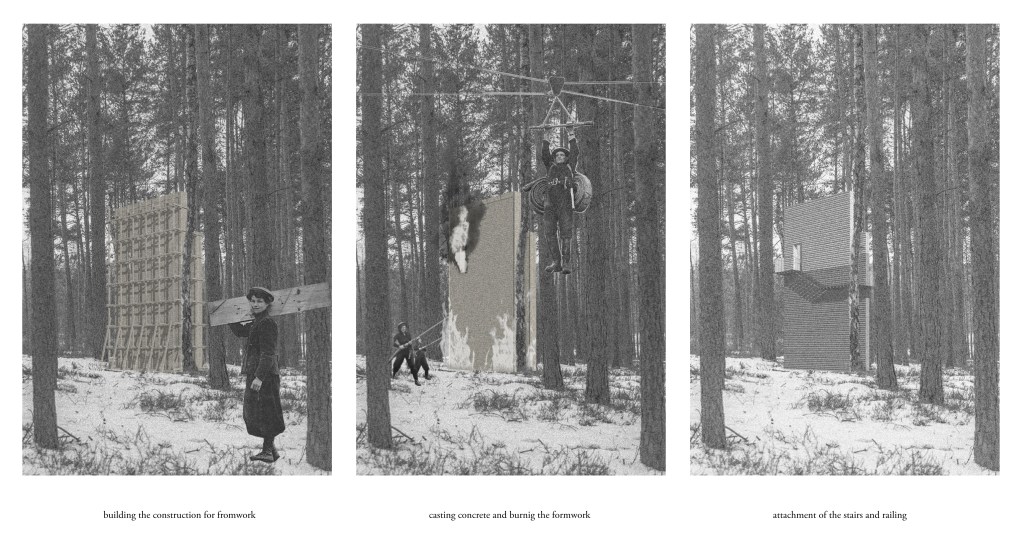
This installation is connected with the ritual of healing – counting. We count to calm down or to fall asleep – we also count to illustrate the amount of for example victims of a crime. The installation works as an observation tower. It also shows – in two different shades of concrete the percentage of Otwock’s population before the war that was exterminated – the darker grey, and the one that has survived the war in the brighter.
It is made out of self healing concrete that is cast in a wooden formwork that is being burned down. The stairs and railings are made out of cast iron. The materiality and processes have been inspired by the existing materials in the local context. The fact that the local wooden heritage was being destroyed in fires, has evoked some reflection and sparked the interest in the previously overlooked wooden villas. This led me to a conclusion, that a destructive force can also be used in a process of creation of value.
The wood used in the construction of the formwork is re-used for the sundial installation. The burning of the formwork becomes a ritual. What was important for me to create a structure of an almost eternal lifespan. That would remain on site even if no one would come there and take care of it. Therefore, it is made out of self healing concrete that is a material that repairs itself. When the concrete cracks the bacterias included in the mixture are being activated and produce limestone that fills up the crack.
The reading room
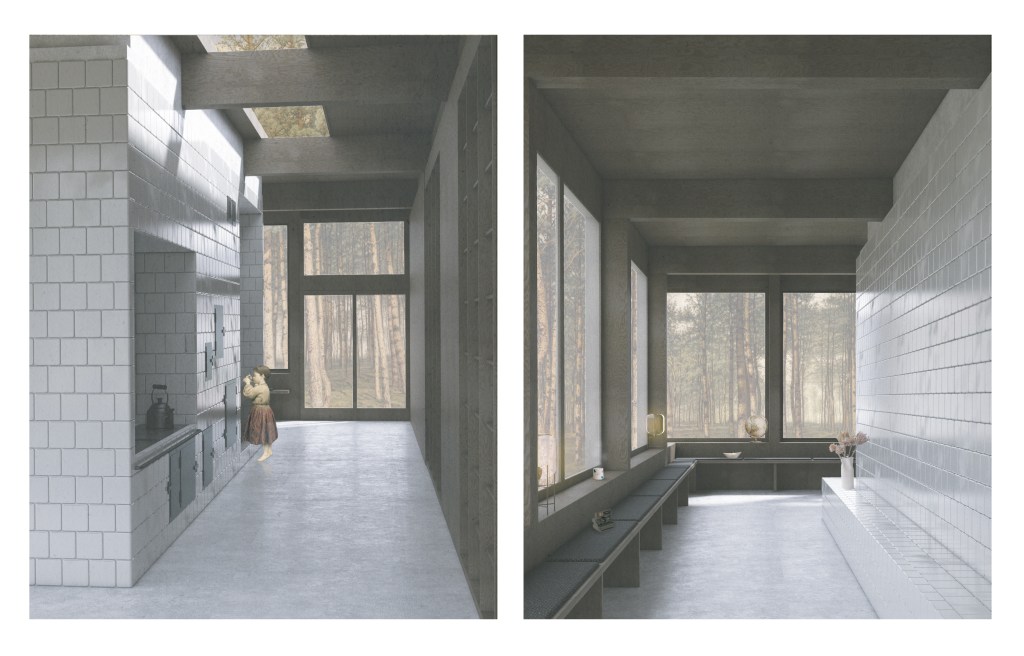
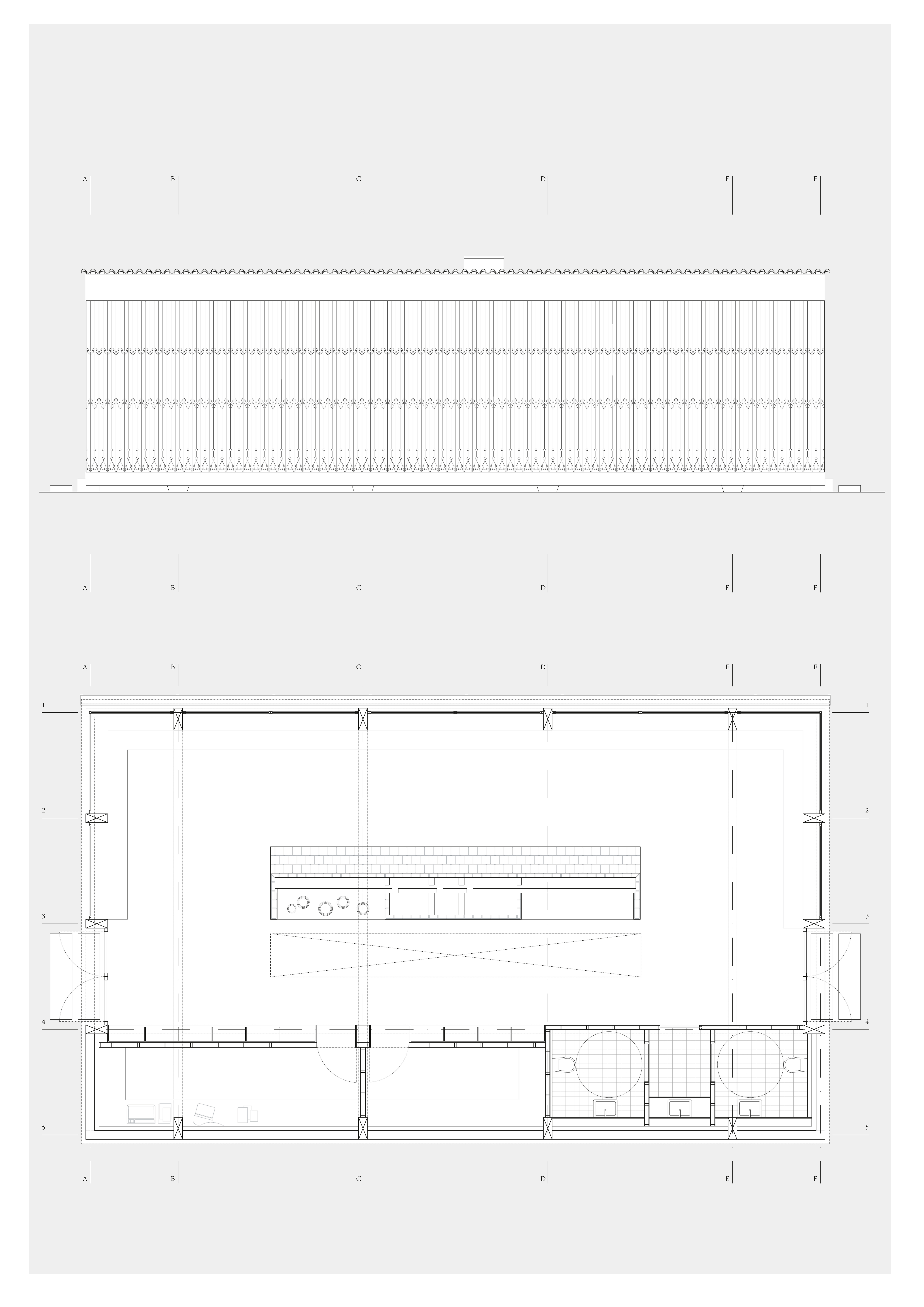

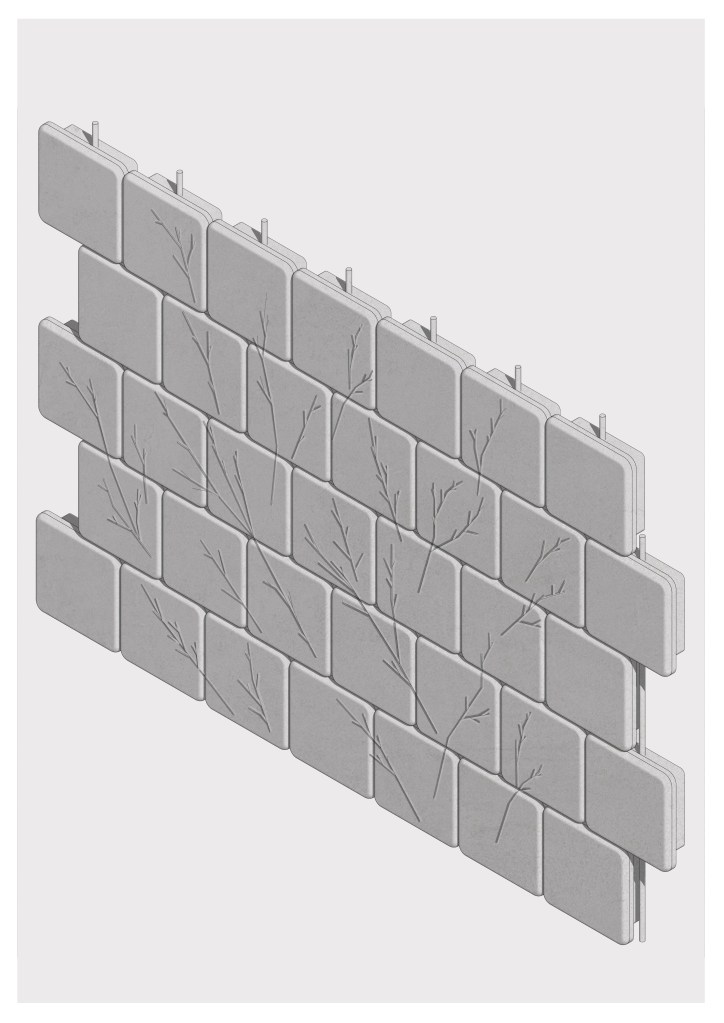
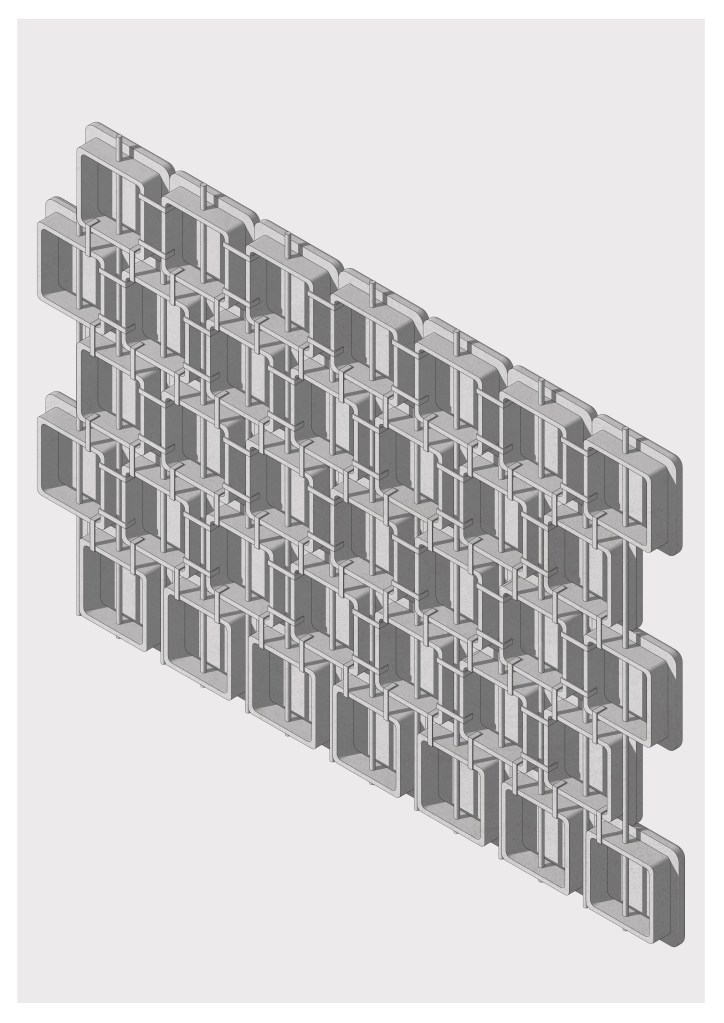
The last installation is the reading room – installation that refers to the rituals of exercising the memory. It is an enclosed heated space where one can sit and read the archive materials connected with the pre-war Jewish community in Otwock. The outer facade is made out of wooden shingles that are cut in the typical forms observed in the region, so the facade becomes an archive of these ornaments. The shingles are impregnated by natural pigments prepared from waste from pine wood production.
The central element of the interior is the warm bench connected with the chimney. That is a traditional element of old polish houses reinterpreted. The tiles are hand- made during workshops with the local community. They are decorated with imprints of pine branches. Afterwards with the use of the moulds made during the workshop, the tiles are being cast, fired and glazed.
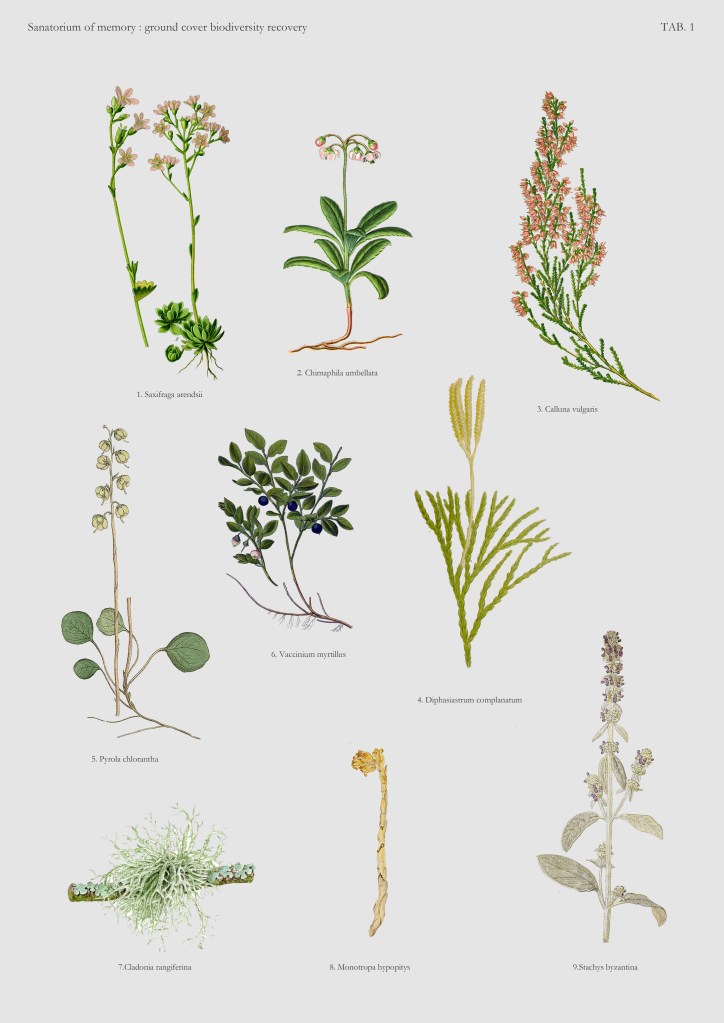
All installations come together creating a landscape of memories. I also investigated some of the types of plants endangered in the region that should be reintroduced to the site, recreating lost the natural beauty of this forest. As Walter Benjamin claims we find ruins alluring, due to their ambivalent status of half-nature, half-architecture. Therefore the project I focus both on design of architectural structures as well as ways of re-introduction of biodiverse nature to the site.
In my project I question the approach the common to memorials – as designed for eternity? To preserve memory one has to “exercise” it. In this project I want to propose a set of installations that deal with processes in time, some are epehemieric – made to disappear, some are cyclical, retained by exercise or preservation, maintenance of a structure. Some like the existing ruin, are also eternal, made to last.
 adkworks.photo.blog