Healing Otwock
ongoing research | 2020 – 2021
as a part of Exercising Modernity Academy 2021
In 2021 I return to my research on the ways to rehabilitate the collective memory of the Jewish community in Otwock. Initially I started it a year ago, as a part of my architecture master thesis at the Royal Danish Academy of Fine Arts. Taking another step forward in this journey, I have decided to for a second look back at it’s beggings. Below some excerpts from the thesis program where I have defined the outline of the project.
______
Prologue
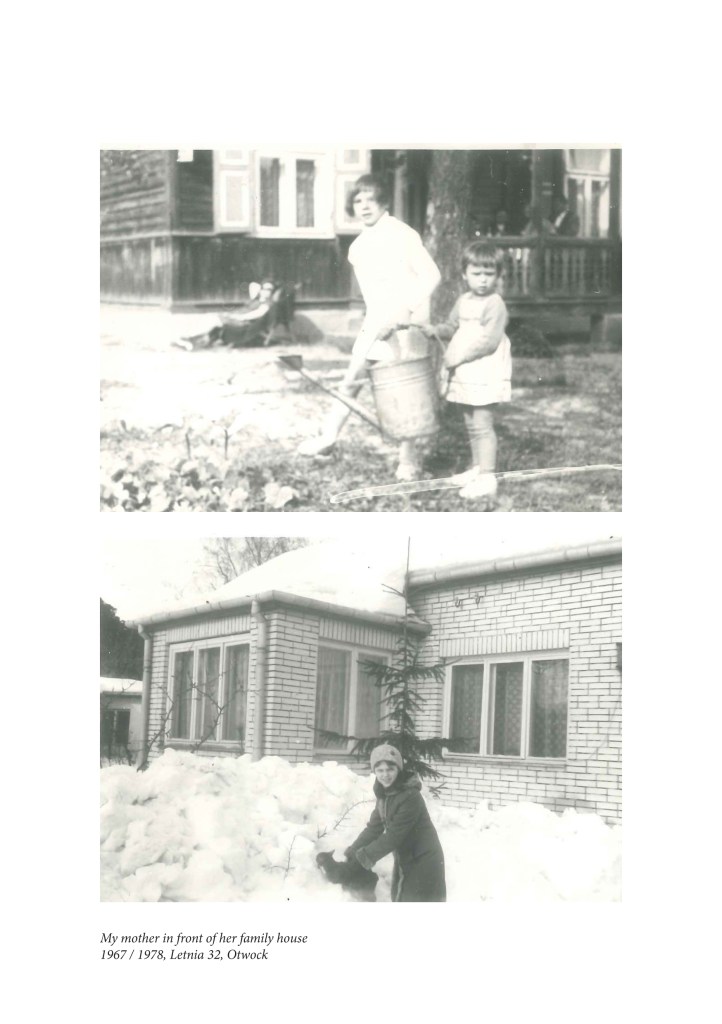
” The investigation into the collective memory of Otwock has a personal link for me as well. My mother’s family comes from the city, therefore the investigation apart from a general perspective will also be marked by my own personal memory and understanding of the place. The personal and the collective memory intertwine, creating a story to be told with means of architecture. Hopefully, by the end of the process, I will manage to create something that satisfies my internal urge to go back the memory lane, in order to understand my identity, as well as to inspire the city to regain a fraction of its own collective memory. “
Memory
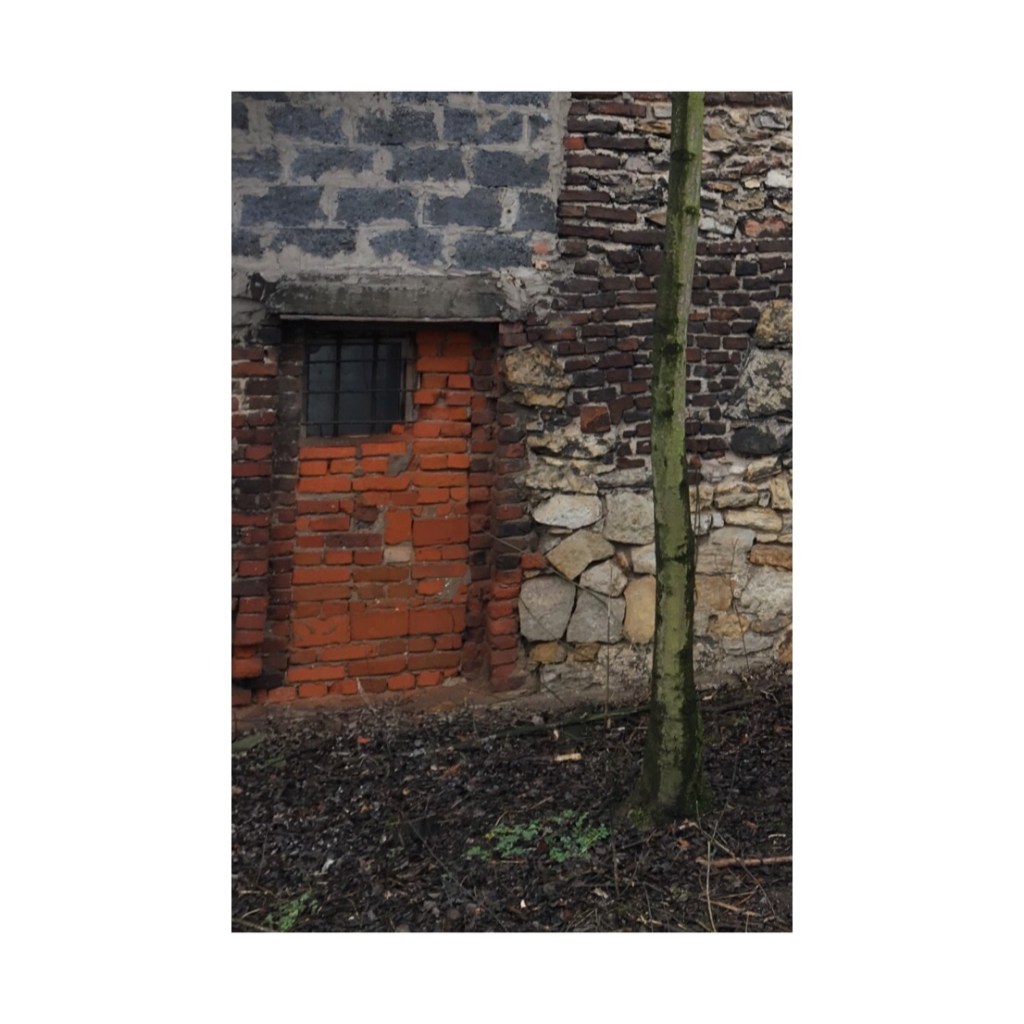
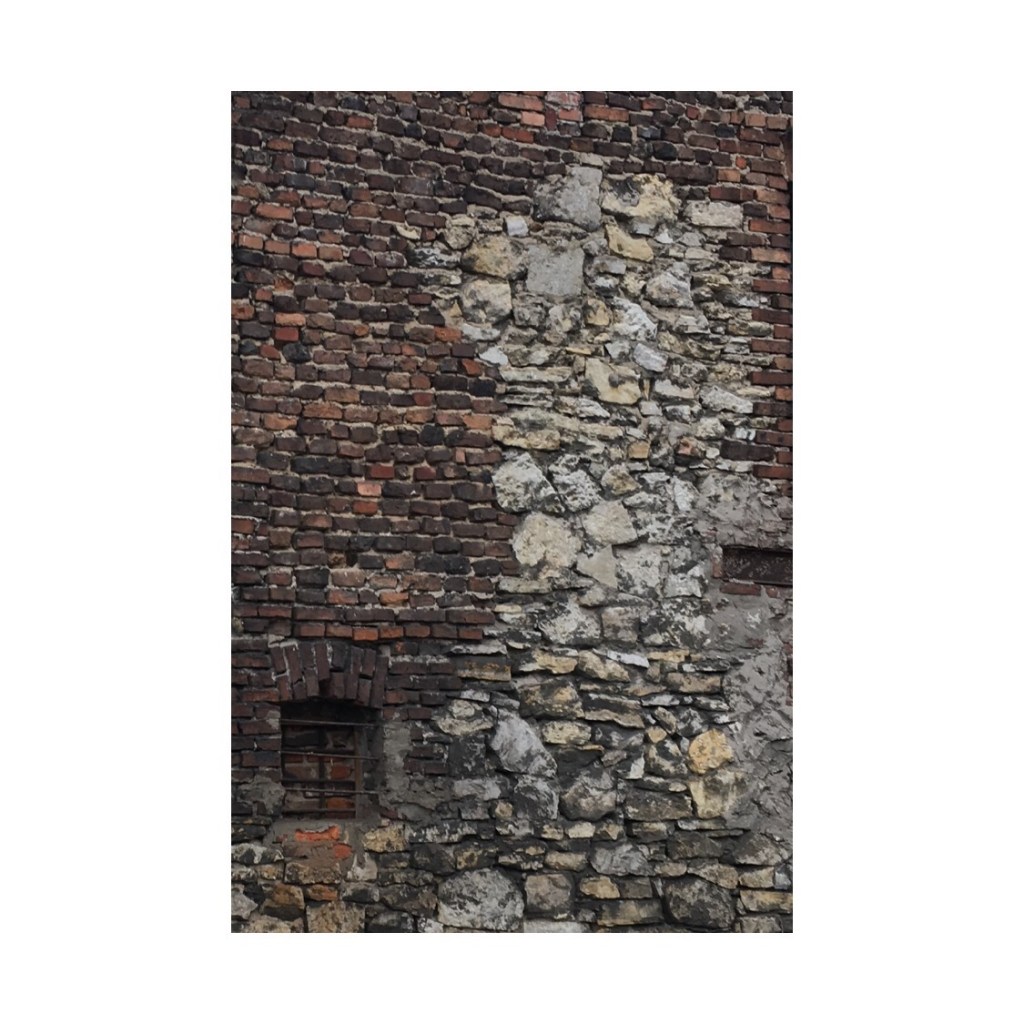
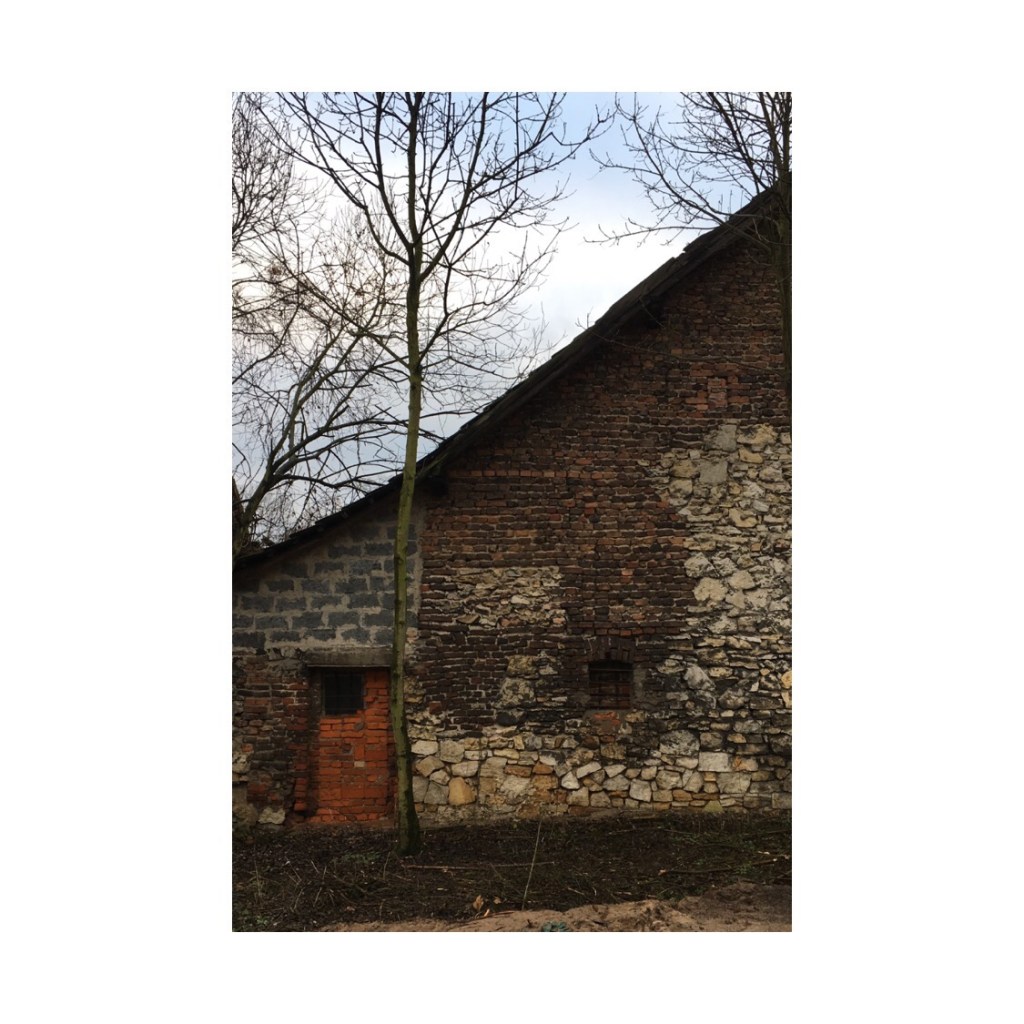
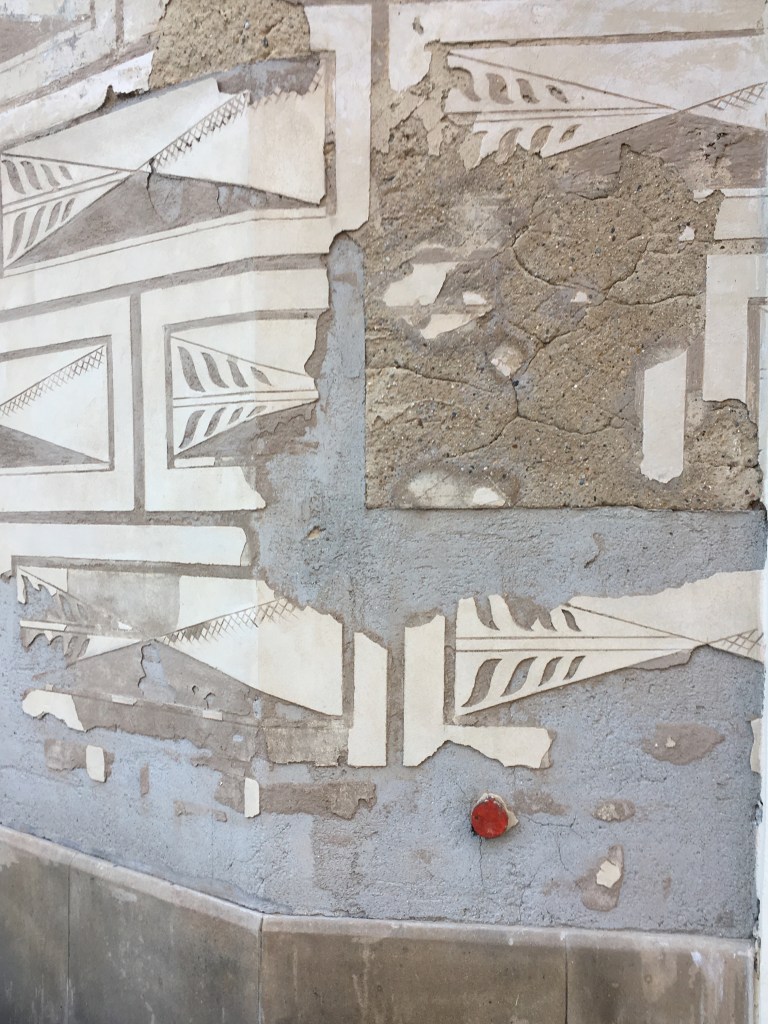
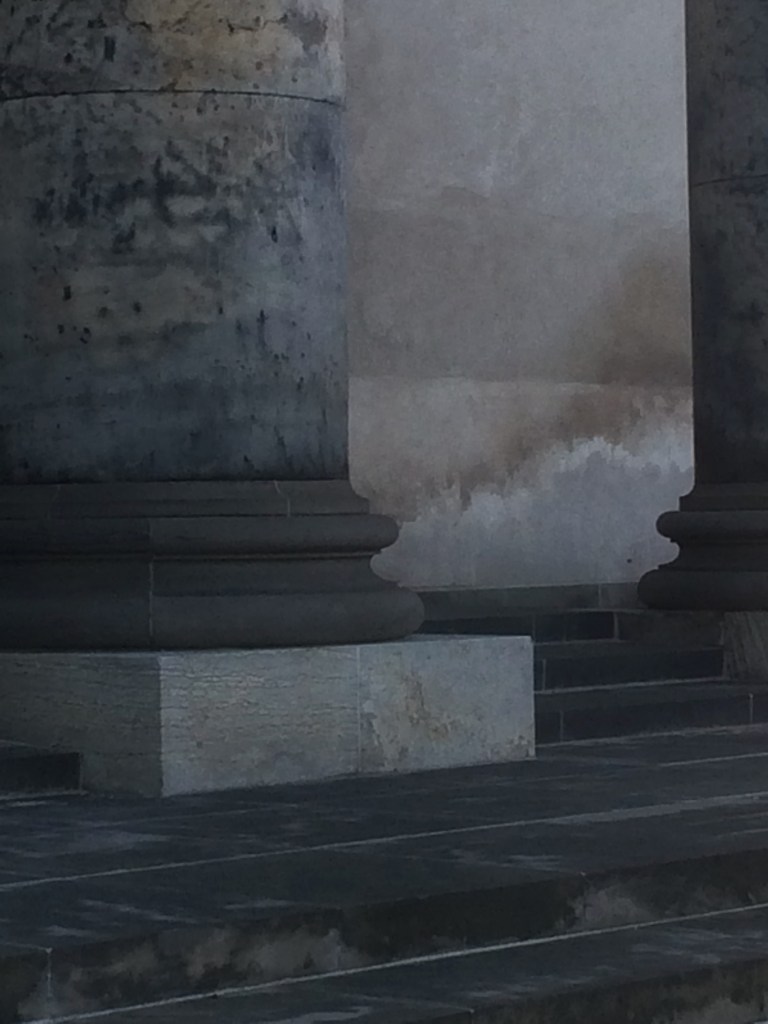
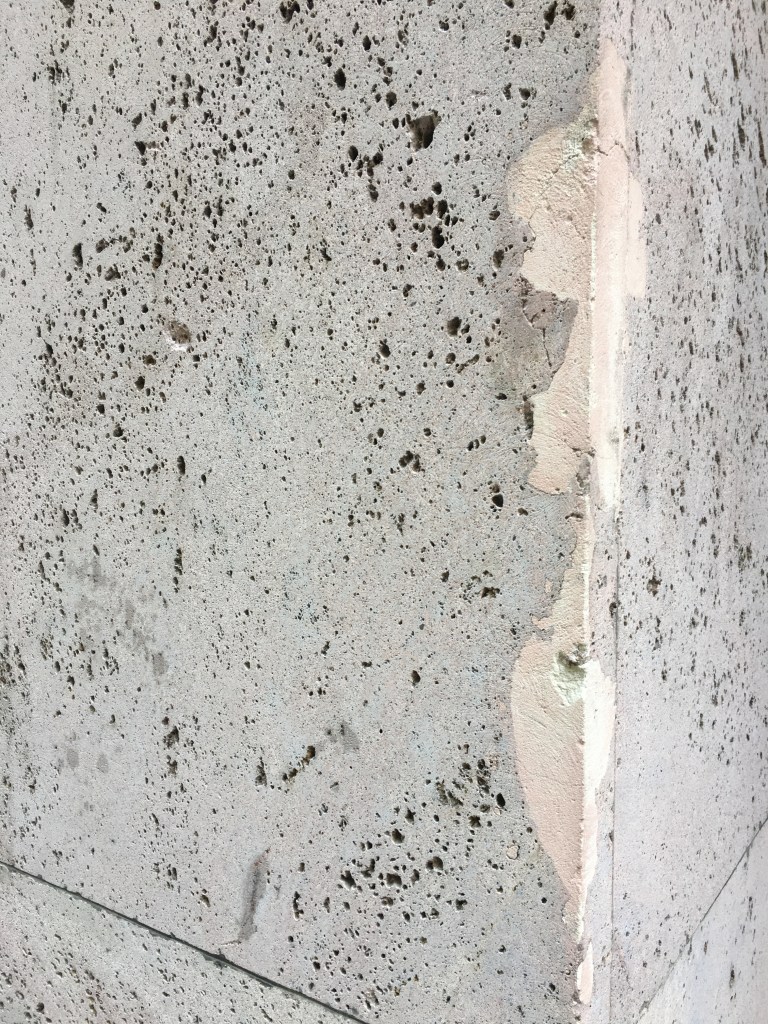
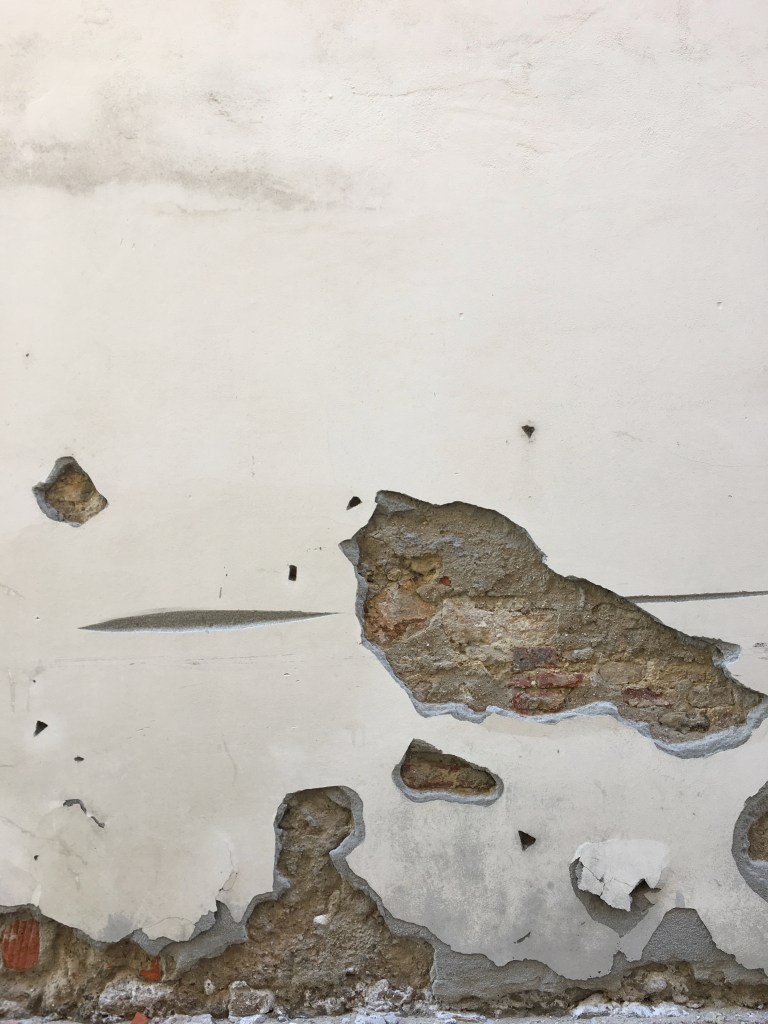
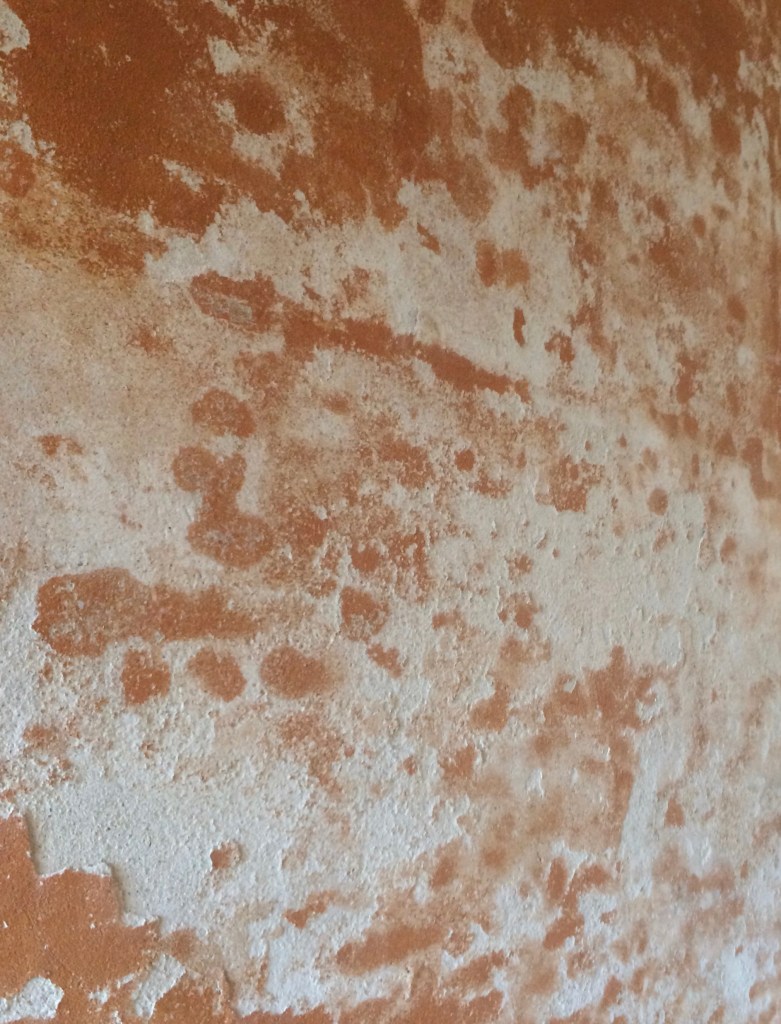
” Memories are ways we store and recall information from the past, they belong to the world of concepts and have an ephemeric nature. Therefore usually objects become the personifications of the fragile memories that could be easily lost in the mind, that constantly produces new thoughts concerning every event that occurs with the passage of time. According to architecture, this process is more complex, buildings outlast lifespans of their owners, change ways of use and interpretation of meaning, which might result in the memory of events to be re-written again. Buildings become a palimpsest, with a spatial dimension. The stratifications of layers of the marks of memory that are embedded in the building’s fabric allow architecture to step into the metaphysical level of comprehension.
What part architecture can play in the act of collective remembering? And how does the death of architecture, ruination or decay of a structure speak of its position in the collective memory?”
Locus
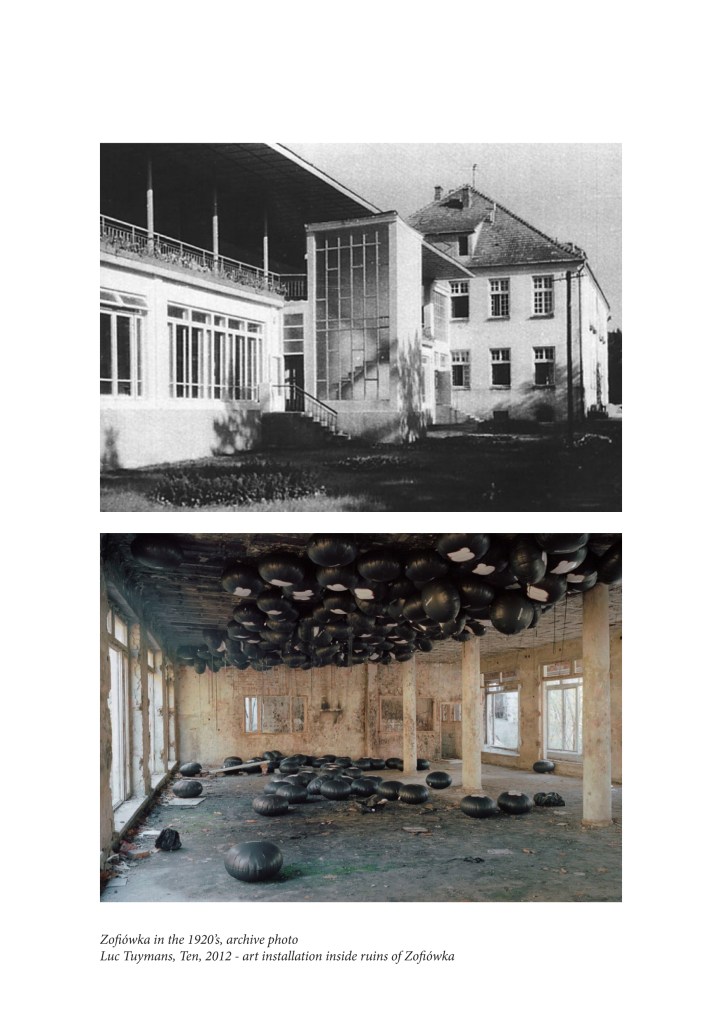
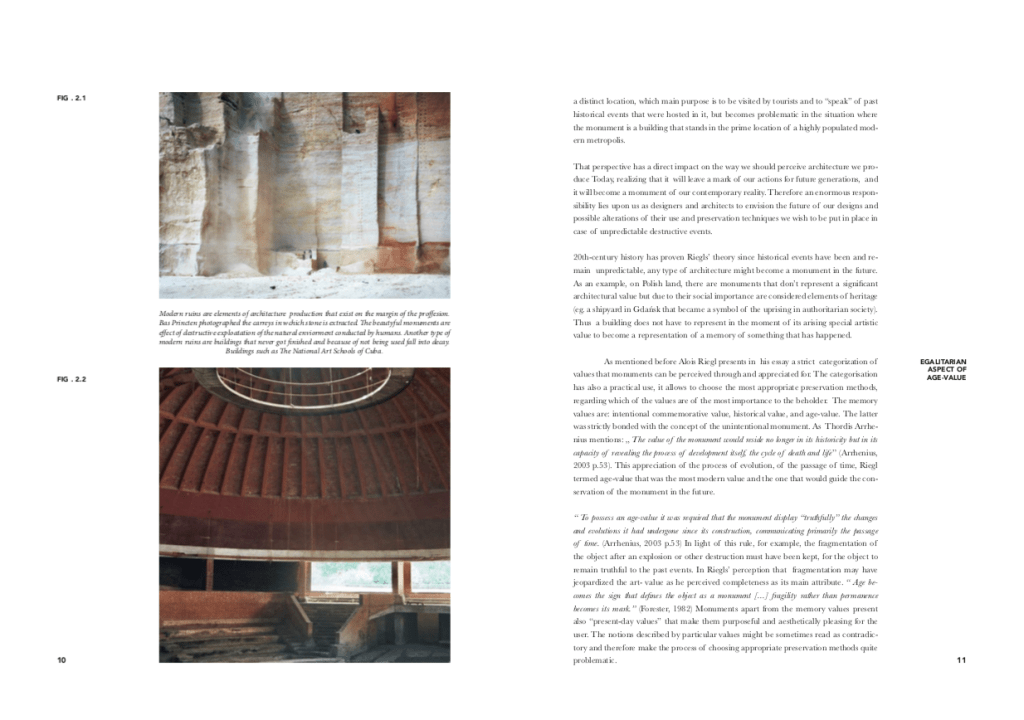
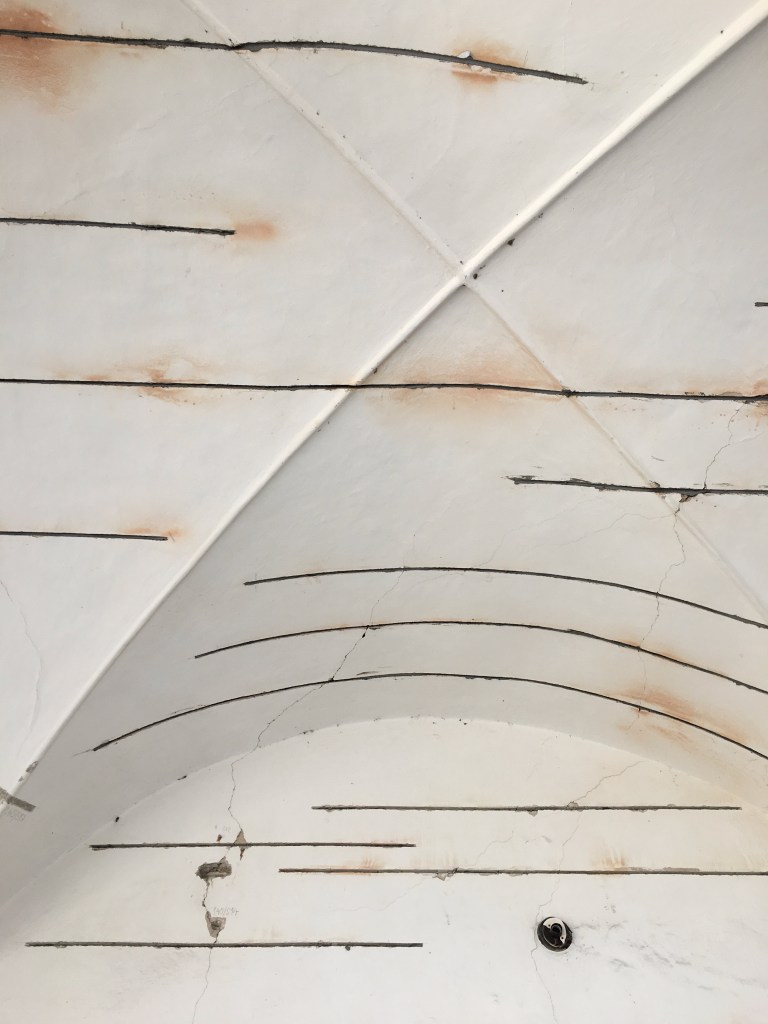
” Sanatorium Zofiówka is an unintentional modern ruin, that became one due to the lack of nourishment and care. It’s present state clearly, without deep examination tells us that, the structure lost its meaning, that the decayed appearance is an effect of neglect of its importance among local habitants. The state of the building Today can be described as “construction catastrophe”, and any acts of re-activaton the structure would basically end up in full renowation of the building with exhange of most of its elements. Moreover that would be untruthful to the past and rules of conservation practice.
The project aims to express and underline to link between space and tragic past that eventually led to the ruination. Thefore the existing ruined structure is seen as a metaphor for the state of the abundance of memory and lack of interest that can be sympthomatic for the lack of interest in the past among present generations. Zofiówka is not the only ruin in Otwock, there are many old wooden buildings that felt into decay but also uncompleated investments from the 90s and early 00s that visually resemble ruins. Exposed raw materials of unfinished houses and shops, become ruins that speak of financial crisis. “
Healing Otwock
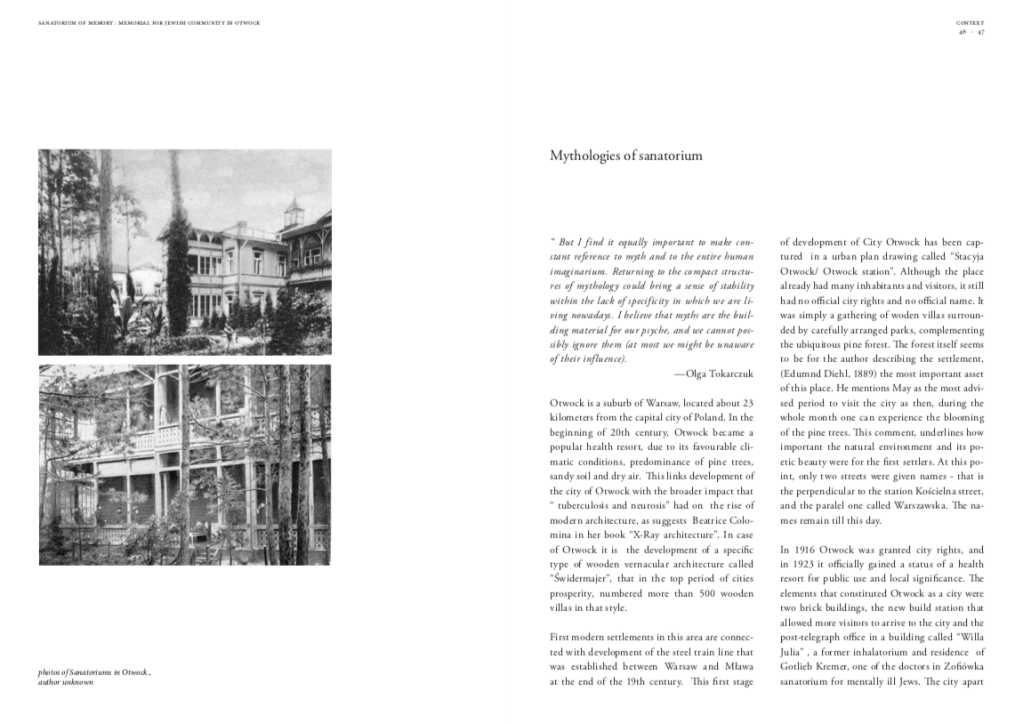
” The development of the city Otwock can be traced back to the end of the 19th century when the rail between Mława and Warsaw was built. Due to its close proximity to the capital and particularly favorable dry condition of air (predominance of pine forests) the city became a health resort, with many sanatoriums and vacation houses. Otwock and the smaller surrounding cities established a typical type of wooden architecture called Świdermajer.
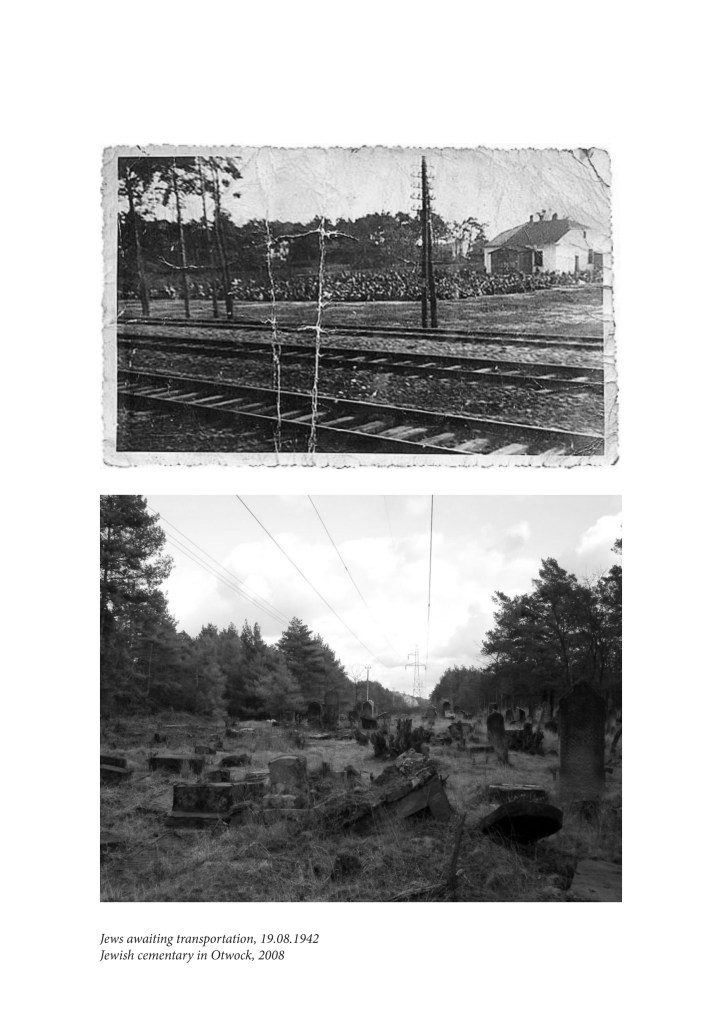
During the WWII nazi occupation, within the city borders, a ghetto was established. Because of numerous predominance of Jewish citizens over polish catholic neighbors, the ghetto spread over a considerable part of the central area of the city. Zofiówka, the sanatorium for mentally ill Jews also was incorporated into the ghetto. On the night of 19th of August 1992, the ghetto was closed down proceeding with transportation of more than 8 thousand people to the Treblinka death camp.
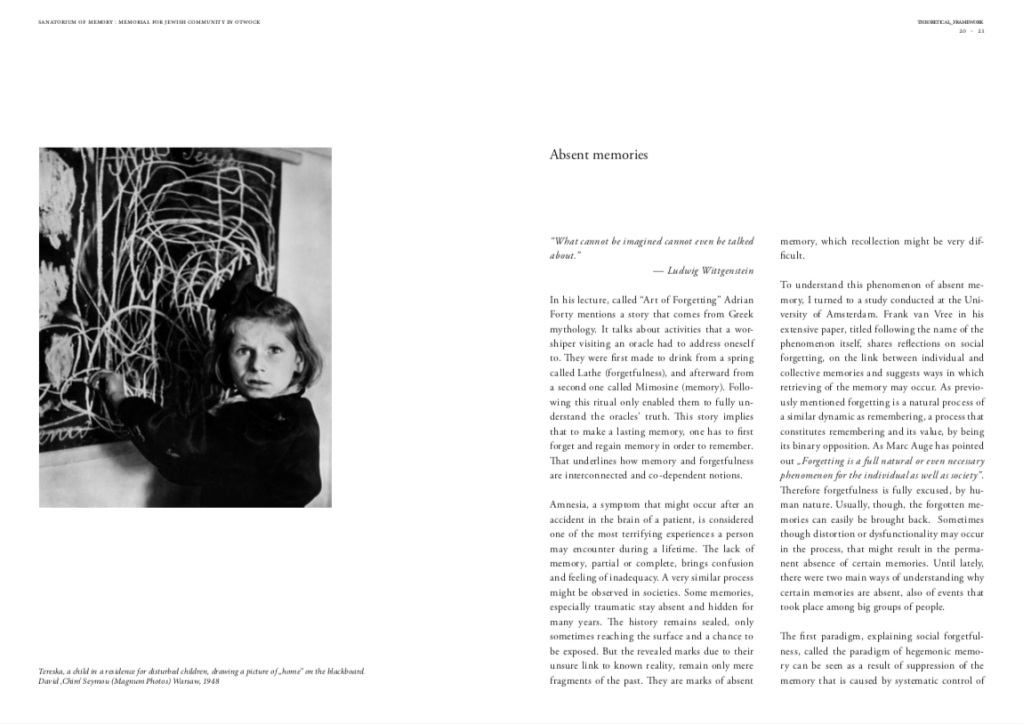
Today the memory of the Jewish community in Otwock is very fragmented. There are 2 commemorative stones in the city, a Jewish cemetery that has been had been tidied up not more than 12 years ago and multiple ruins of wooden houses and other buildings. Amnesia is not the only symptom of Otwock’s problems.”
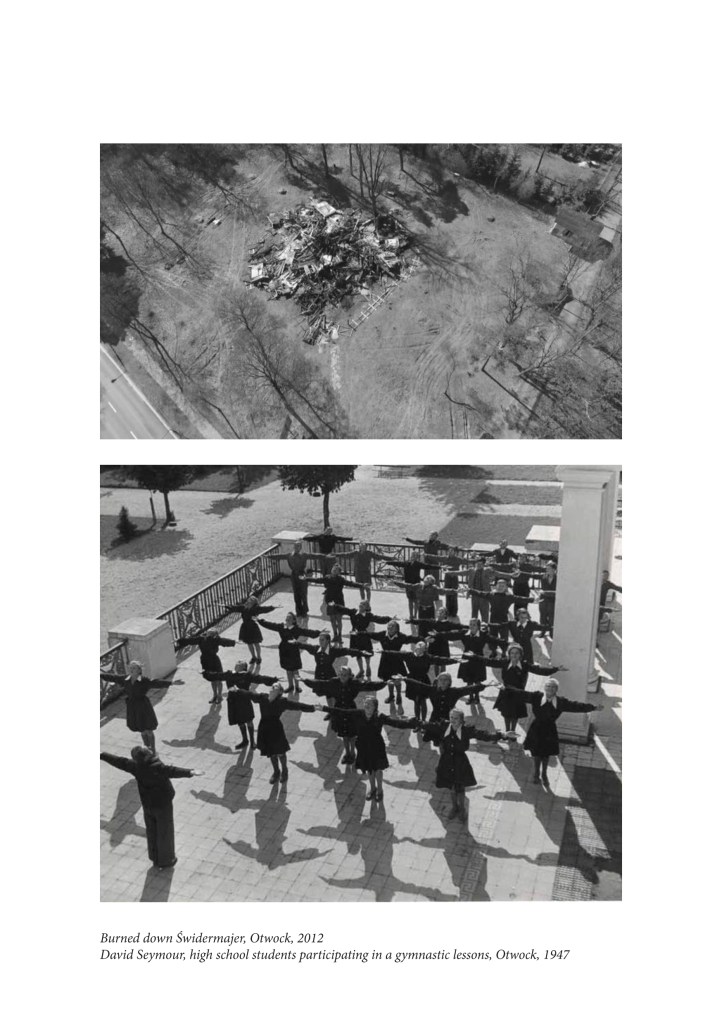
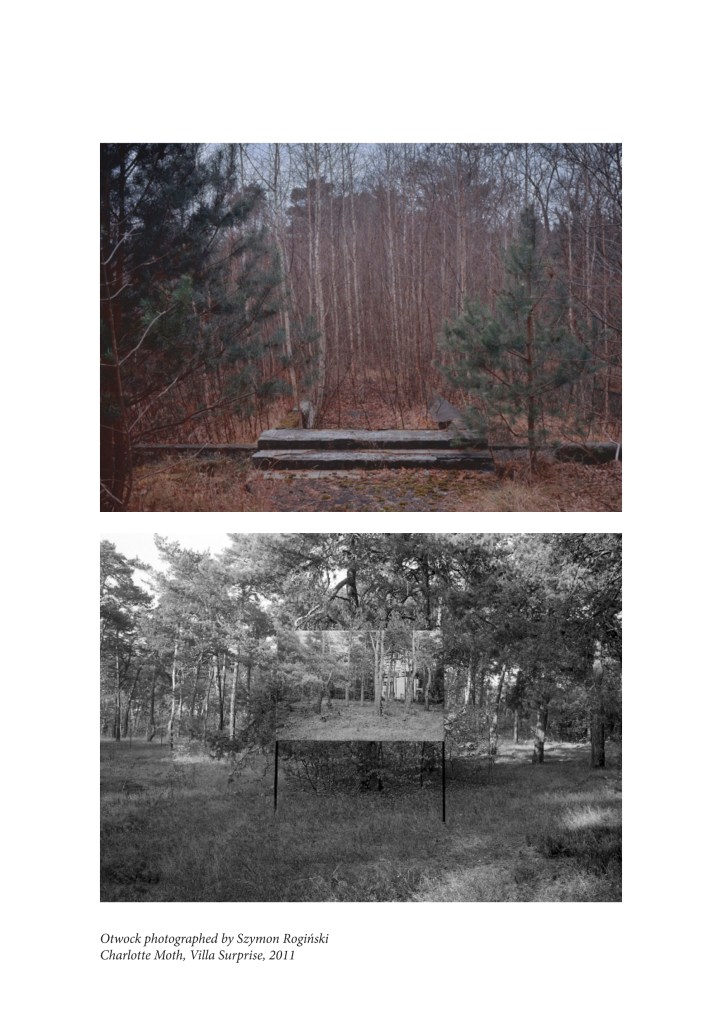
Examining the condition
” Otwock is not doing well – symptoms of the disorder are multiple, there are numerous cases of vandalization of buildings dating before the second World War. Denial of recent history which results in repetition of the same mistakes, further devastation of the heritage. Insufficient nourishment of the local identity, lack of varied historical narrations. Dezurbanisation and spatial disorder caused by new chaotic urban developments. Poor quality of the materials of new buildings, flawed local law regulating aesthetics and spatial arrangement for new investments. Otwock is no longer considered a sanatorium resort.
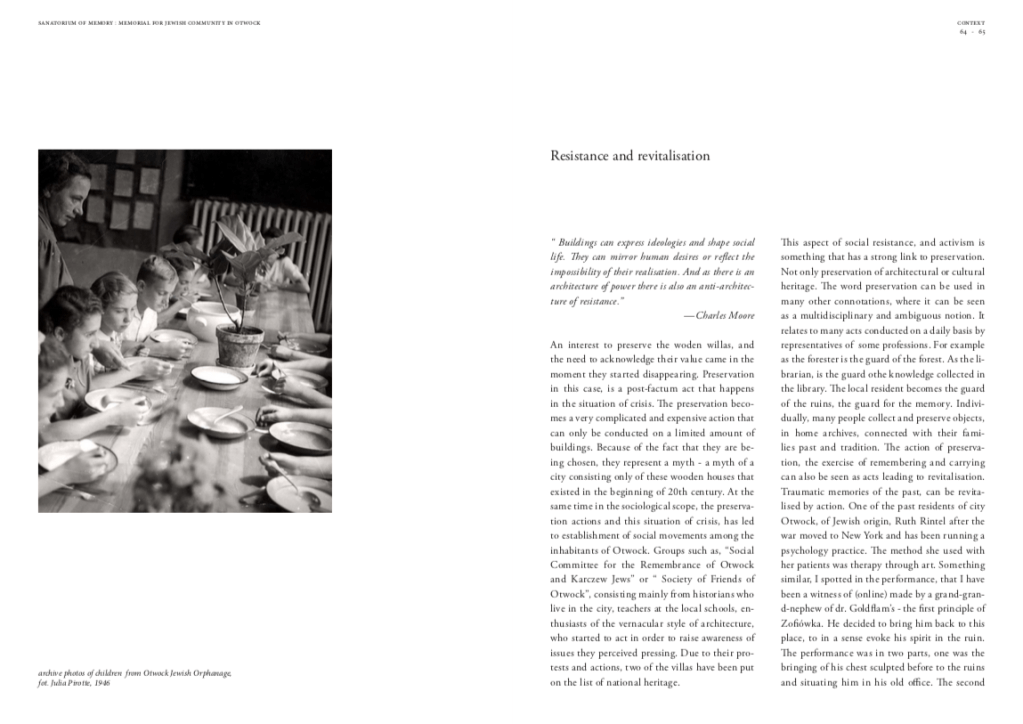
It used to be a place connected with specific rituals, allowing the process of healing to occur. These rituals were being performed in cycles, enabling the factor of repetition to embrace the state of body or mind to overcome the sickness. Rituals codify the way users move through space. They also link the past and present, they keep the tradition alive, bond the community. Some buildings become a stage for the rituals to happen. Religious buildings are an example of this kind of architecture, a frame for a communal experience. Rituals imprint themselves in memory of users. They allow linking the action and space. We might say that a user that comes to the sanatorium has a body that is ruined. Architecture can also become a ruin. To help the patient to get better, a cause of the sickness must be traced and dealt with in a specific way.”
Learning to remember
” Remembering and forgetting are two processes that are very alike. In Greek mythology they ere represented by two water streams located next to two each other, as it was believed that one has first to forget, to then recreate a lost memory, and remember. Conservation is a practice that architecture developed to nourish memory, pay respect to the history that shaped what we know, to cherish the actions of those who created the past, the identity of a place. It is mainly put in place when significant harm has been made to buildings tissue when it starts to fall into decay.
Some cultural images might become part of collective memory, even if we personally have not taken part in them. Holocaust for people living in Poland today is that kind of memory. It is almost impossible, to grow up in Warsaw and not to be exposed to the memory of the ghetto, not to know where it was located (boarders of the ghetto are marked in the city pavement). These marks shape the understanding of the city’s identity as we move through it on a daily basis.
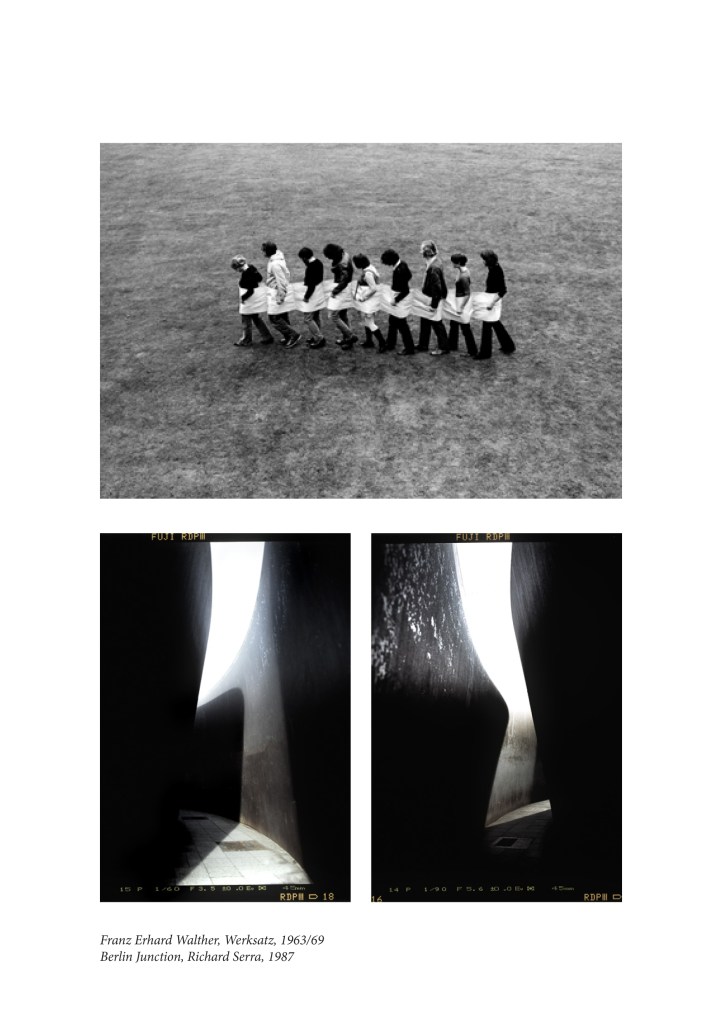
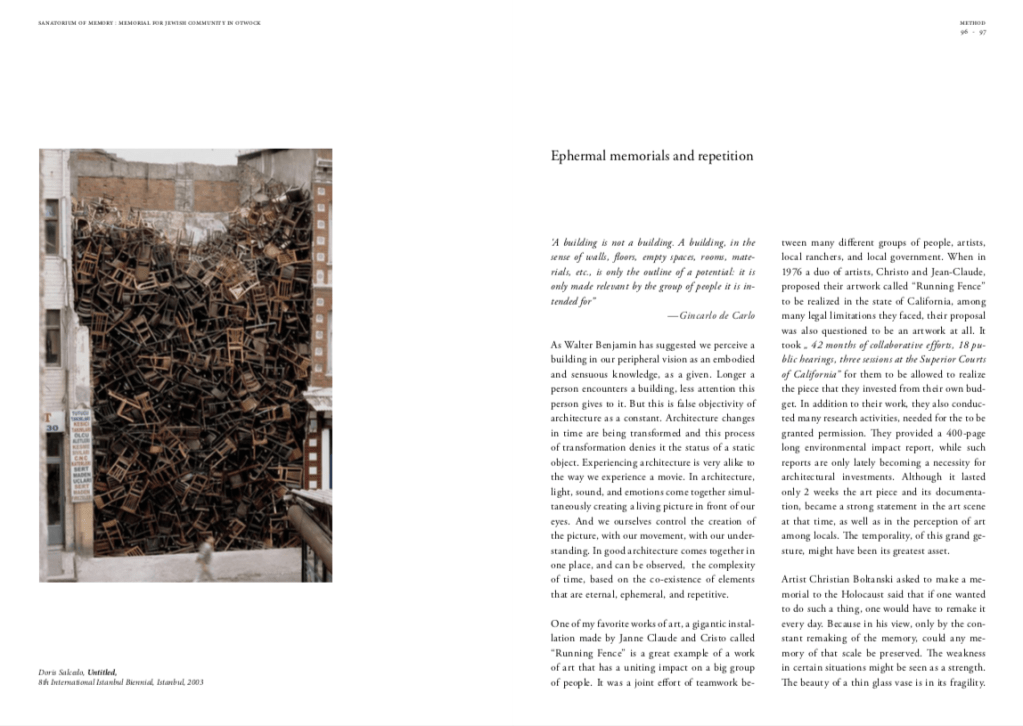
Reactivation of memory can also happen through a reenactment of an event from the past, or by establishing a tradition that is being cultivated on an annual base. The memory is being created, again and again, allowing to shorten the distance between the present and the moment in the future when again it will be lost, due to the passage of time. Some practices have been preserved that way for centuries, passed down from generation to generation. Spaces and actions may trigger a memory to reoccur.”
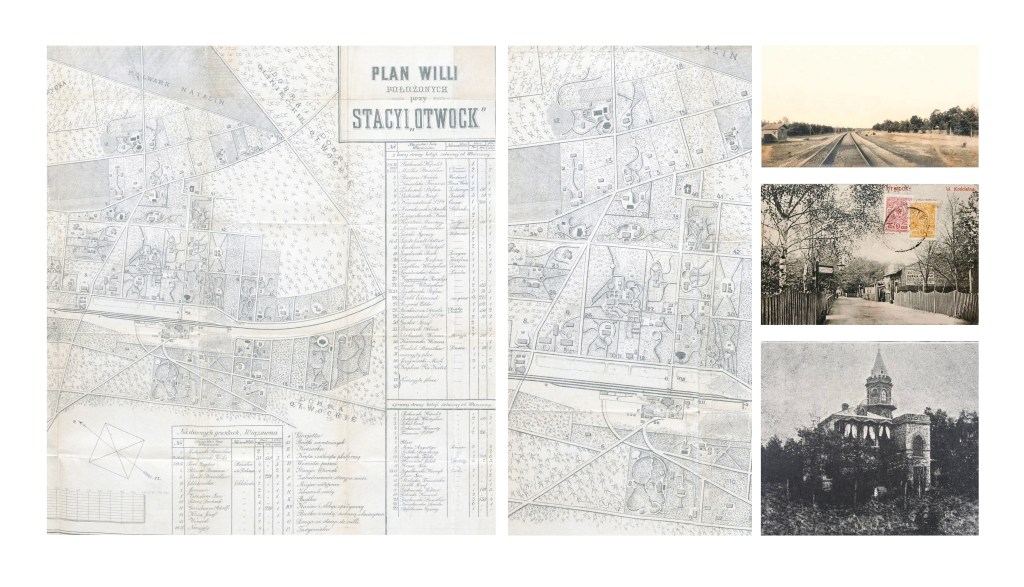
Sensible architecture
” Change in build environment is inevitable, new generations want to make their mark, develop the living environment to suit their contemporary purposes. Modernism wanted to cut itself from the past, create compleatly new architecture and eventually, that became its biggest burden. Innovation has to be rooted in tradition because as we would like to think that with each generation we drastically change, on a basic level we are still very alike to our ancestors.
The architect has to like any other artist, any concerned individual, reach to the basics of understanding of the purpose of the practice, to find new ways of development in crisis. Deconstruct everything known, deconstruct meanings and deconstruct his role. Find something to believe and follow. A philosophy of doing, philosophy of aesthetics. To become present, he has to listen before he says. Observe things that surround him, before putting his own creation on display.
In the age of climate crisis, architecture has to find ways to limit the extraction of raw materials, turn to the search for the new radical matter. Has to focus on the implementation of reductive solutions such as zero waste, reparations, bio-degradability, bio-diversity, degrowth, use of renewable materials. Revisit known from antiquity practices as spolia, palimpsest, reuse of materials and elements, as a means to achieve sustainable production of architecture, imprinted with meaning. Critical preservation encourages to establish of unconventional relationships between architects and users. It redefines the role of the user and time, as two actors who unconsciously give value to architectural objects. Where preservation is perceived as an active approach rather than a post-factum reaction to change.”
Architect making a move is always in conversation. Sitting by a table, will all others that have made a statement, spoke of things before. And then add his voice to this conversation that happens over centuries. The language is formulated with forms, elements, shapes, and materials. They reflect the development of the practice in history. This language is not a secret entity. It has reached the public, it is understandable. Maybe the architects are just the ones who have perfected it to the level they can use it freely, create new words – neologisms. ”
 adkworks.photo.blog